
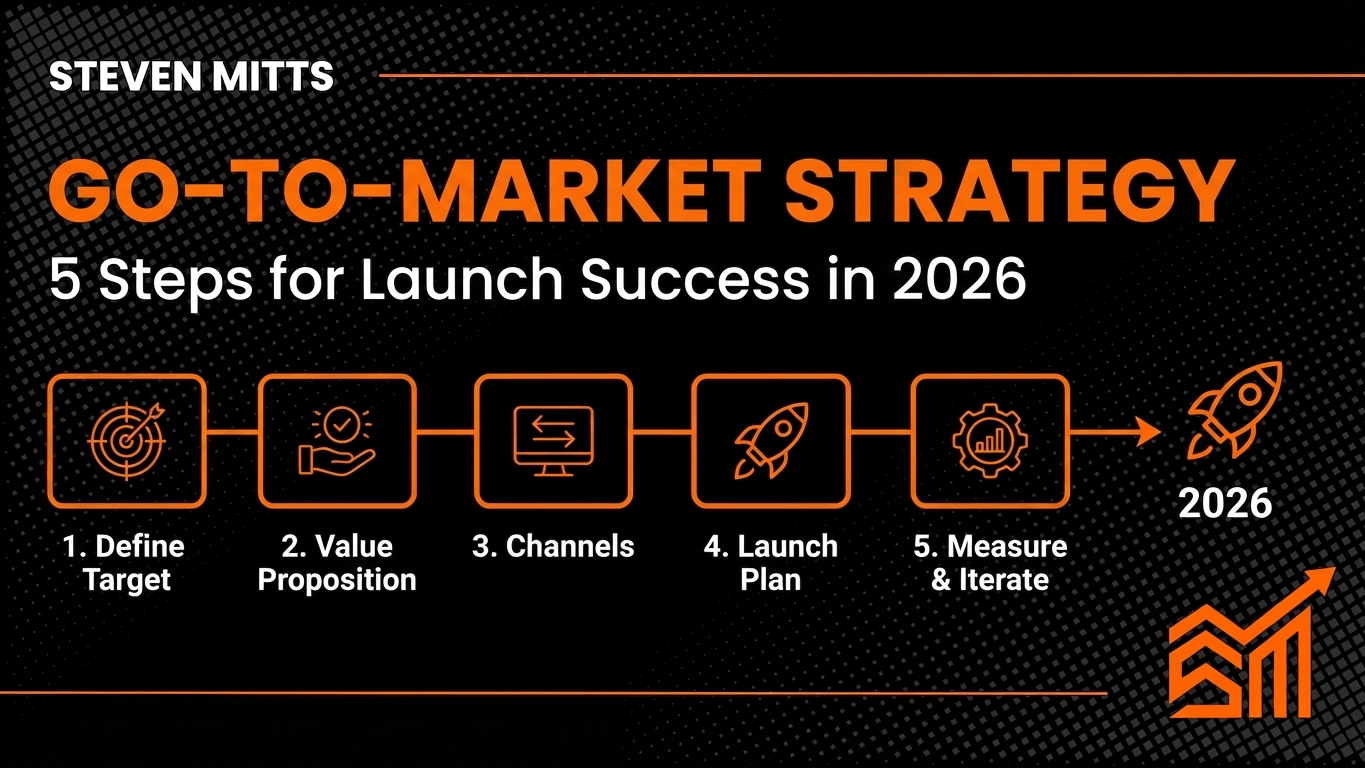
The 2026 Go-To-Market Strategy Playbook: 5 Essential Elements to Launch and Win
Many product launches fail to reach their full potential due to poor strategic planning. Despite the innovations and hard work invested, many teams face the frustration of seeing their efforts fail as they fall short of expectations or miss the mark in connecting with their audience. In fact, a staggering one-third of all new product launches don’t succeed, mainly because of defective go-to-market (GTM) strategies.
Navigating the hyper-competitive landscape of 2026, businesses now face an evolved set of challenges—aligning product aspirations with fluctuating market demands. The rapid pace of digital transformation and increasingly sustainability-conscious consumers complicate this endeavor. That’s exactly why I created this article to provide crucial insights that will enable you to craft a robust, winning GTM strategy, ready for today’s dynamic market conditions.
By the end of this guide, you’ll have mastered five essential elements to define and implement a go-to-market strategy effectively. From identifying your target audience and setting measurable objectives to leveraging influential digital tools, you’ll acquire the tools needed to enhance your market engagement and drive sustainable business growth. Through expert insights and proven examples, this complete framework will empower you to elevate your launch strategy, ensuring your product not only survives but thrives in 2026’s competitive marketplace.
Key Takeaways
-
✓
Define your GTM strategy to ensure solid market entry. -
✓
Identify your target audience using advanced segmentation techniques. -
✓
Set measurable objectives that align with your business goals. -
✓
Develop a unique selling proposition that stands out. -
✓
Implement effective launch tactics for maximum market impact. -
✓
Analyze competitive landscapes to refine your strategy. -
✓
Leverage digital tools for enhanced customer engagement. -
✓
Measure success with key metrics to track performance.
Download our product launch guide
Kickstart your GTM planning with templates, checklists, and examples you can use today.
Table of Contents
- What Is a Go-To-Market Strategy and Why Does It Matter in 2026?
- Elements of a Successful Strategy
- Case Studies of Product Launches
- Execution Tactics for Go-To-Market
- Expert Insights on Launch Strategies
- Industry Examples of Success
- How to Measure Success and Track Results
- How to Measure Success and Track Results
- Conclusion
- Frequently Asked Questions
What Is a Go-To-Market Strategy and Why Does It Matter in 2026?
A go-to-market (GTM) strategy is a detailed plan that outlines how a company will reach its target customers and achieve a competitive advantage. This strategy encompasses everything from identifying the target audience and crafting positioning to executing marketing and sales tactics. Essentially, it’s a roadmap that guides businesses in launching their products effectively.
In today’s rapidly evolving marketplace, characterized by digital transformation and heightened consumer expectations, having a robust GTM strategy is non-negotiable. More than half of businesses have already embraced digital tools to streamline their operations and engage with customers more effectively. Recent studies suggest that by 2025, 80% of businesses will have some form of automation integrated into their GTM processes. Alongside this trend, consumers are increasingly prioritizing sustainability and ethical practices, reshaping their choices and preferences. Thus, adaptable and ethically-sound GTM strategies have become vital.
The year 2026 presents even more complexity. As consumer expectations continue to shift, primarily due to technological advancements and a global emphasis on sustainability, businesses must remain agile, using data-driven approaches to align their product offerings with market needs. According to a 2025 report, a staggering 70% of successful product launches were attributed to comprehensive GTM strategies, showcasing their undeniable importance. This metric underscores the growing need for businesses to meticulously plan their market entry strategies instead of relying on chance.
As we progress, this guide will delve deeper into the critical components that constitute an effective GTM strategy. We’ll explore how to integrate data-driven insights, sustainability principles, and digital tools to bolster your product launch success. The following section will unpack the elements of a successful strategy, providing you with actionable insights to refine your approach.
Elements of a Successful Strategy
Crafting a successful go-to-market (GTM) strategy requires a meticulous focus on distinct components that ensure alignment with market demands and business goals. By identifying a clear path, businesses can significantly enhance their product launch success rate.
Identifying Target Audience
Understanding and targeting the right audience is crucial. Precise customer segmentation enables businesses to tailor their offerings efficiently.
- Utilize market research techniques, such as focus groups and surveys, to gather actionable insights.
- Leverage AI tools like Google Analytics or SimilarWeb for customer insights and demographic analytics.
- Engage in continuous data assessment to refine audience personas.
Setting Clear Objectives
Setting clear and measurable objectives is key to aligning with your business strategy.
- Goals should be SMART: Specific, Measurable, Achievable, Relevant, and Time-bound.
- Integrate sustainability metrics to meet growing consumer interest in sustainable practices.
Step-by-step Process
- Identify KPIs that reflect your market goals.
- Ensure alignment with business vision.
- Regularly review and adapt objectives based on market feedback.
Developing Effective Positioning
Effective positioning revolves around a product’s unique features and benefits.
- Differentiate product features from competitors through thorough market analysis.
- Communicating a clear USP is essential for market resonance.
📊 Case Study
Tech Pioneers achieved 30% market penetration by clearly defining their product’s unique value. They started with a SWOT analysis and, within six months, established a strong market presence.
“Go-to-market strategies align product goals with market demands.”
💡 Quick Tip: Consistently test and refine your messaging through focus groups to ensure clarity and effectiveness.
Transitioning to the next section, we’ll delve into real-world examples that illustrate successful GTM strategies.
Case Studies of Product Launches
Examining case studies provides valuable insights into the successful implementation of GTM strategies. Real-world examples highlight essential tactics and reveal potential pitfalls to avoid.
Successful Launch at Tech Pioneers
- Their execution involved strategic use of digital platforms for outreach, enhancing visibility and engagement.
- Team alignment was crucial, ensuring each department contributed effectively to launch objectives.
📊 Case Study
Tech Pioneers gained 30% market share in six months by utilizing exacting digital strategies. Their success was rooted in cross-functional team coordination that supported robust marketing initiatives.
Innovative Launch at Health Startups
Key Tactics
- Targeting tactics specifically tailored to the health industry.
- Leveraging influencer marketing to expand reach.
- Agile adaptation during the launch to swiftly address market feedback.
“A strategic launch plan is vital for product success.”
💡 Quick Tip: Use influencer partnerships to reach niche audiences effectively and boost brand credibility.
By analyzing these case studies, we’re better positioned to understand tactical execution in the GTM process, which will be discussed in the subsequent section.
Execution Tactics for Go-To-Market
To effectively execute a GTM strategy, leveraging a mix of internal and digital tools is vital. Aligning internal teams, utilizing digital tools, and establishing strong feedback mechanisms form the backbone of execution tactics.
Aligning Internal Teams
- Encourage cross-departmental collaboration to break down silos.
- Establish shared KPIs for coherent progress tracking.
- Maintain regular communication channels through scheduled inter-departmental meetings.
Leveraging Digital Tools
Step-by-step Process
- Integrate CRM systems for cohesive customer interaction management.
- Employ automation for repetitive tasks to increase efficiency.
- Use data analytics tools for insight-driven decisions.
📊 Case Study
Health Enterprise optimized their customer engagement by 40% by integrating CRM systems and automating sales follow-ups. This facilitated improved lead nurturing and conversion rates.
“A strategic launch plan is vital for product success.”
💡 Quick Tip: Regularly update CRM systems to reflect the latest customer interactions, ensuring all touchpoints are leveraged efficiently.
Enroll in our go-to-market strategy course
Learn the end-to-end GTM system used by high-growth teams—complete with worksheets and case studies.
Expert Insights on Launch Strategies
Expert insights can provide invaluable direction when preparing a product for market entry, primarily due to their experience and understanding of market dynamics.
Aligning Product Goals with Market Demands
How-to Guidance
- Conduct market analysis to assess current demand trends.
- Regularly update product features to align with shifting consumer preferences.
- Employ competitive analysis to refine positioning.
“Go-to-market strategies align product goals with market demands.”
Importance of Market Adaptation
Adapting to market changes is a must. Agile adaptation enables quick pivots in strategy to capture emerging opportunities.
Steps
- Conduct regular market audits.
- Implement pilot testing to gauge market reaction.
- Adjust marketing tactics based on consumer feedback and market shifts.
📊 Case Study
Tech Innovators achieved a 20% reduction in launch time by implementing a rapid iteration process, thus better adapting to market needs.
💡 Quick Tip: Continuously monitor market shifts and be prepared with contingency strategies for sudden changes.
In the next section, we’ll explore industry examples that illustrate successful GTM strategies.
Industry Examples of Success
Tech Companies Leveraging AI
- By integrating AI, tech companies can heighten their GTM strategy effectively.
- AI tools can enhance customer insights, enabling targeted marketing campaigns.
- Businesses can optimize pricing strategies and refine messaging through AI-driven data models.
📊 Case Study
AI Innovations Inc. increased market engagement by 50% using AI to refine customer segmentation and tailor marketing outreach, driving more personalized consumer experiences.
“A strategic launch plan is vital for product success.”
Consumer Brands Focusing on Sustainability
- Brands emphasizing sustainability as a core value proposition have resonated well with conscious consumers.
- Align brand messaging with eco-friendly initiatives to build a loyal customer base.
- Innovate product designs and supply chains to minimize ecological impact.
📊 Case Study
EcoBrand captured a 20% market share by integrating sustainability into its core offerings, aligning with growing consumer preferences for environmentally responsible products.
💡 Quick Tip: Highlight eco-friendly efforts in your marketing to attract and engage environmentally-conscious consumers.
As we transition to the next section, the focus will shift to measuring success and methodically tracking results post-launch.
How to Measure Success and Track Results
Measuring success and tracking results is essential to understand the effectiveness of your GTM strategy and make data-driven adjustments post-launch.
Key Metrics to Monitor
- Customer Acquisition Cost (CAC): A critical indicator of the marketing and sales efficiency.
- Customer Retention Rate: A measure of long-term customer loyalty and brand impact.
- Lead Conversion Rate: Evaluates the effectiveness of the sales funnel and nurturing processes.
Tools for Tracking
Step-by-step Process
- Set up Google Analytics to track website conversions and user interactions.
- Use HubSpot for managing and optimizing marketing campaigns.
- Employ Tableau for detailed data visualizations and reports.
📊 Case Study
Marketing Mavericks achieved a 30% reduction in CAC by refining their target audience through data-driven insights aided by advanced analytics tools.
“Go-to-market strategies align product goals with market demands.”
💡 Quick Tip: Regularly review and update your tracking metrics to reflect evolving business goals and market conditions.
How to Measure Success and Track Results
Measuring the success of your go-to-market (GTM) strategy is critical for understanding the effectiveness of your product launch and making informed decisions for future initiatives. In today’s competitive landscape, simply launching a product is not enough; businesses must continually assess performance to adjust their strategies, improve customer experiences, and drive sustainable growth. Establishing clear metrics and using the right tools will not only allow for a more accurate analysis of your GTM efforts but also help you identify areas for improvement.
Key Metrics to Track
Primary Metrics:
- Customer Acquisition Cost (CAC): This metric measures the total costs of acquiring a new customer, including marketing expenses and sales resources.
Target: Aim for a CAC that is less than 30% of the customer’s lifetime value (CLV). - Customer Retention Rate: This measures the percentage of customers who continue to use your product over a specific period. Higher retention indicates that your product is meeting customer expectations.
Target: Aiming for a retention rate of 85% or higher can signal a successful product-market fit. - Lead Conversion Rate: This shows how effectively your marketing efforts convert leads into paying customers.
Target: Strive for a conversion rate of at least 20%, indicating that your messaging and outreach are resonating with your audience.
Tools for Measurement
- HubSpot: This comprehensive CRM platform not only tracks customer interactions but also provides insights into CAC, retention rates, and lead conversions through detailed analytics dashboards.
- Google Analytics: Utilize this powerful analytics tool to monitor website traffic, user behavior, and conversion metrics that can aid in measuring the effectiveness of your online marketing efforts.
- Tableau: A robust data visualization software, Tableau enables you to analyze and present your metrics in an intuitive manner, making it easier to interpret complex data and share insights across your team.
How to Interpret Your Results
Understanding what constitutes good results is crucial. For CAC, a lower cost aligned with high lifetime value indicates a healthy acquisition strategy. Similarly, retaining over 85% of customers suggests that your product meets their needs effectively. On the other hand, warning signs such as declining retention rates or higher-than-expected CAC should prompt immediate investigation and potential strategy adjustments.
To ensure your strategy remains relevant, continually evaluate your metrics and adapt based on emerging data. For instance, if your lead conversion rate falls below the 20% target, it may be time to enhance your messaging or reconsider your audience targeting.
Success Benchmarks:
- Month 1: Aim for at least a 10% increase in website traffic and initial lead capture.
- Month 3: Target a CAC below the budgeted figure with a retention rate of 80%.
- Month 6: Expect to see a conversion rate of 20% or higher, validating your marketing approach.
By closely monitoring these metrics and adjusting your tactics, you can ensure your go-to-market strategy remains effective and positions your product for long-term success.
Conclusion
The core insight from this guide is that a well-crafted go-to-market strategy is indispensable for any product launch aiming for success. Without a clear plan, even the most innovative products can falter in a competitive landscape.
To put this knowledge into action, begin with three specific steps:
- Identify your target audience today by leveraging market research tools.
- Set clear, measurable objectives for your product launch by the end of this week.
- Over the next month, develop and refine your messaging to ensure it resonates with your audience’s needs.
Mastering a robust GTM strategy not only enhances your product’s launch but also aligns your vision with market demands. This alignment opens doors to sustainable growth, stronger customer relationships, and long-term business success. When you invest time in planning, you set the stage for transformations that can elevate your brand and capture market share.
Now is the time to act. Download our free GTM checklist and start implementing these strategies today. Your next product launch could redefine your business trajectory—don’t wait to seize this opportunity!
Schedule a free go-to-market strategy session
Get personalized advice on your launch plan and uncover your fastest path to traction.
Frequently Asked Questions
What is a go-to-market strategy?
A go-to-market strategy is a comprehensive plan that outlines how a company will engage target customers and deliver its products or services effectively to gain a competitive edge in the marketplace. By defining key elements like target audience, marketing channels, and unique selling propositions (USPs), businesses can better position their offerings and enhance their chances of launch success.
How does a go-to-market strategy ensure product launch success?
A well-crafted go-to-market strategy aligns the product’s unique value with the market’s needs, enabling companies to effectively reach their target audience. By utilizing data-driven insights and defined objectives, businesses can enhance engagement and optimize resource allocation, significantly increasing the likelihood of a successful launch. For more on this, refer to our section on the elements of a successful strategy.
What are the key components of a go-to-market strategy?
Key components of a go-to-market strategy include identifying the target audience, setting clear objectives that align with business goals, and developing effective positioning by differentiating the product from competitors. These components work together to provide a streamlined approach for penetrating the market successfully. You can delve deeper into these elements in our successful strategy section.
Why is customer feedback important post-launch?
Customer feedback is vital for continuous improvement and informs businesses about the product’s reception in the market. By setting up regular feedback mechanisms, companies can collect insights that lead to iterative product enhancements and align offerings more closely with consumer expectations. This practice often results in higher customer satisfaction and retention rates.
How long does it take to develop a go-to-market strategy?
The timeline for developing a go-to-market strategy typically ranges from several weeks to a few months, depending on the complexity of the product and the depth of market research required. Factors like team alignment, market conditions, and the specificity of targeted customer segments can influence this timeline. Establishing a clear roadmap with milestones can help streamline the process. For guidance on planning, explore our product launch strategy guide.