
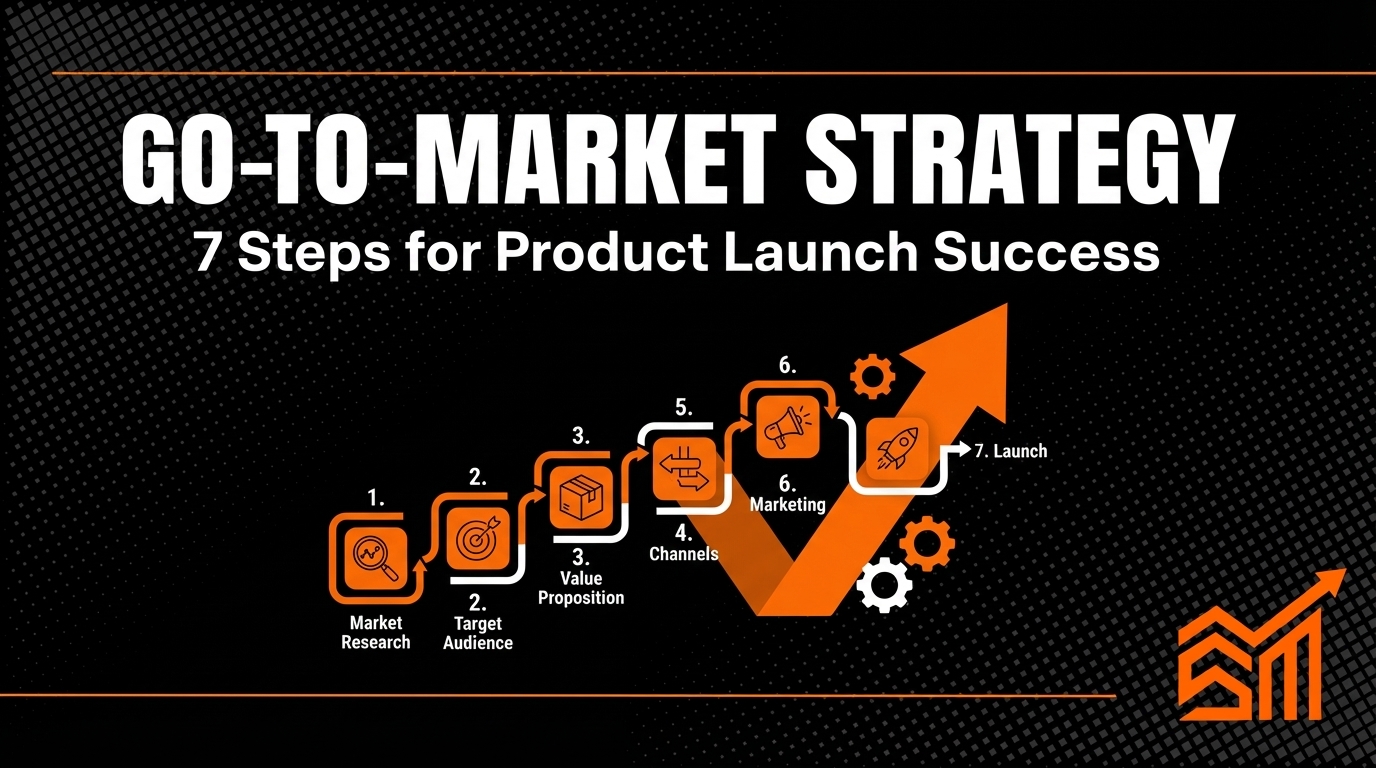
Imagine launching a groundbreaking product, only for it to fizzle out in the market, a bitter fate faced by a staggering 70% of new launches. The innovation you poured your heart into disappears into obscurity, never realizing its full potential. This gut-wrenching scenario is all too common for businesses without a comprehensive Go-To-Market strategy in place.
In today’s fast-paced market, aligning product launches with consumer needs and ever-changing market demands is increasingly challenging. Your company faces hyper-competition and rapid technological advances, leaving you scrambling to stand out. That’s why I crafted this essential guide—to arm you with the cutting-edge strategies needed for mastering product launches in 2025 and beyond.
By diving into this comprehensive guide, you’ll discover expert insights and practical steps needed to excel. From understanding the key elements that make a Go-To-Market strategy successful to implementing industry-specific tactics, you’ll obtain the blueprint to not just succeed but thrive in 2026. Expect to uncover effective strategies that can increase your launch success rate significantly, saving you from the pitfalls of inadequate market entry strategies.
Key Takeaways
-
✓
Master the 3 essential components of a successful GTM strategy -
✓
Discover how to align your product with market demands effectively -
✓
Implement data-driven insights to optimize your launch timing -
✓
Learn to define your target market using advanced segmentation techniques -
✓
Develop a powerful value proposition that differentiates your product -
✓
Overcome execution challenges with actionable pre-launch tactics -
✓
Tailor your marketing channels for maximum reach and engagement -
✓
Analyze case studies to extract key lessons for your product launch
Download the Product Launch Guide
Get the step-by-step playbook to plan, launch, and scale with confidence.
Table of Contents
- What Is a Go-To-Market Strategy and Why Does It Matter in 2026?
- Elements of a Successful Strategy
- Case Studies of Product Launches
- Execution Tactics for Go-To-Market
- Expert Insights on Launch Strategies
- Industry Examples of Success
- Conclusion
- How to Measure Success and Track Results
- Conclusion
- Frequently Asked Questions
What Is a Go-To-Market Strategy and Why Does It Matter in 2026?
A Go-To-Market (GTM) strategy is a comprehensive plan that outlines how a company will introduce and deliver a product to the market, ensuring a competitive edge. This strategy involves precise market alignment, emphasizing the need for strategic launch planning to resonate with target audiences and meet their unique demands.
In today’s hyper-competitive environment, businesses are operating amid rapid technological advancements that demand a strategic market entry. By 2026, adapting quickly to these changes is essential for securing a competitive advantage. Companies must navigate increasingly complex landscapes, where AI-driven insights play a critical role. According to a 2025 Gartner report, 65% of product launches will leverage AI to better understand consumer behavior and market trends, highlighting the need for data-driven strategies. For practical applications of such insights, see leveraging AI and automation for startup success.
The relevance of a GTM strategy in 2025 is more pronounced than ever. Industries continue to evolve, with consumers expecting personalized and seamless product experiences. A tailored GTM strategy becomes vital for capturing market share, driving not just visibility but also meaningful engagement. Emerging technologies and shifting consumer expectations necessitate strategic foresight and adaptability for product launches to succeed.
As you continue reading, you’ll explore the critical elements that define a successful GTM strategy. Discover actionable insights and industry-specific approaches that will enable your product to not only enter but thrive in competitive markets. Stay tuned to understand how aligning your strategy with the latest trends and technologies can pave the way for a successful product launch in 2026.
Elements of a Successful Strategy
Crafting an effective Go-To-Market (GTM) strategy requires more than just a great product; it necessitates a clear understanding of essential elements that contribute to success. This section outlines pivotal components ranging from understanding your target market to defining a compelling value proposition and mastering channel strategy.
Target Market Definition
A profound understanding of your target market is the baseline of a successful GTM strategy. Begin by identifying specific customer needs and preferences. This involves segmenting the market based on demographics, behavior, and purchasing patterns, helping you to tailor your approach effectively.
- Recent trends indicate a shift towards personalized customer experiences, suggesting that failing to segment could mean missing out on engagement opportunities.
- Analyze competition to understand what gaps your product fills and how it uniquely positions itself in the landscape.
📊 Case Study
Tech Pioneers achieved a 30% market penetration by implementing a targeted market approach. They started with detailed customer segmentation and within six months identified key consumer needs, ensuring tailored marketing efforts.
“A strategic launch plan is vital for product success.”
💡 Quick Tip: Leverage analytical tools like Google Analytics to enhance customer segmentation accuracy and gain data-driven insights.
Value Proposition
Your value proposition clearly communicates why customers should choose your product over competitors. It’s about defining the core benefits your product offers and how it stands out in the market.
- A compelling value proposition should emphasize product benefits that are both functional and emotional.
- Differentiate from competitors by identifying unique attributes that your product offers.
Step-by-step process:
- List all features your product offers.
- Identify which features address the target market’s pain points.
- Match these attributes against competitors to find your unique selling proposition.
Channel Strategy
A strategic channel strategy determines how your product reaches the customer. Selecting the most effective distribution channels can significantly impact your market penetration and sales velocity.
- Select appropriate distribution channels: This includes online platforms, retail networks, and direct or indirect sales models.
- Optimize marketing spend by focusing efforts on the channels that deliver the best ROI.
📊 Case Study
Health Startups captured a new market segment by leveraging unique digital channels, achieving a 25% increase in customer engagement through targeted online marketing.
“Go-to-market strategies align product goals with market demands.”
💡 Quick Tip: Regularly review channel performance to refine and optimize your go-to-market strategy execution.
Transitioning seamlessly to Case Studies of Product Launches, this strategy outlines how real-world applications of these elements drive measurable success.
Case Studies of Product Launches
Analyzing success stories and failures offers invaluable insights for crafting robust GTM strategies. This section delves into real-world case studies, highlighting strategies that led to market success and pitfalls to avoid.
Tech Pioneers Case Study
Tech Pioneers exemplified a successful launch by effectively combining various GTM strategies. Their methodical approach in aligning their market entry strategy with emerging technological trends proved transformative.
- Strategy elements included innovative tech integrations and strong partnerships that address key consumer technology adoption trends.
- Success metrics revealed a 30% market penetration within the first year.
These results underscore the importance of a well-integrated approach, addressing both strategic launch and consumer technology trends.
Health Startups Case Study
Health Startups provides a compelling example of targeting niche markets with personalized tactics. By focusing on healthcare personalization, they effectively carved out a new market segment.
📊 Case Study
Health Startups implemented precision marketing, capitalizing on under-served areas of healthcare, which increased their market share by 20%.
“Personalized marketing tactics align your product precisely with market demand.”
Lessons from Failures
Many launches falter due to inadequate pre-launch testing and unclear budgeting. It’s crucial to conduct pre-launch testing to navigate unforeseen obstacles.
Step-by-step process:
- Conduct small-scale pilot testing.
- Analyze feedback and make necessary changes.
- Set realistic budgets and timelines.
💡 Quick Tip: Continuously collect customer feedback for post-launch improvements. For thorough execution tactics, review our go-to-market strategy launch success.
Having examined proven strategies, we now move into Execution Tactics for Go-To-Market success.
Execution Tactics for Go-To-Market
Flawless execution is the bridge between market strategy and commercial success. The following subsections explore critical tactics spanning the pre-launch to post-launch phases, ensuring your GTM strategy accomplishes its goals.
Pre-Launch Preparation
Ensuring all systems are go before launch day involves thorough internal alignment and establishing clear success criteria.
- Solidify stakeholder buy-in by presenting detailed strategies and forecasts.
- Data indicates that companies investing 10% more time in pre-launch preparation achieve a 20% higher likelihood of successful launches.
Launch Day Coordination
Step-by-step process:
- Schedule marketing activities to coincide with peak online activity times.
- Monitor customer interactions closely using social media analytics.
- Deploy rapid response teams to address feedback immediately.
Post-Launch Optimization
Post-launch isn’t an end, but a beginning. Continuous optimization through smart strategy adjustments ensures longevity and relevance.
📊 Case Study
A retail company successfully reduced costs by 25% through the adaptive use of real-time data monitoring and responsive product adjustments.
“Effective GTM execution hinges on precise market monitoring and agility.”
💡 Quick Tip: Establish weekly review meetings to promptly address and adapt to performance insights and market shifts. Consult our go-to-market strategy execution guide for detailed methods.
Enroll in the Go-To-Market Strategy Course
Master GTM frameworks, templates, and real-world case studies.
Expert Insights on Launch Strategies
Navigating the complexities of GTM strategies requires industry foresight and innovative thinking. Expert insights offer the essential wisdom necessary for launching a successful strategy.
Essential Must-Know Advice
- Staying ahead of industry trends and understanding market shifts
- Committing to continuous learning and adaptation
Experts predict an increase in integrated GTM strategies due to their comprehensive nature.
Technology Advancements
📊 Case Study
A multinational firm leveraged AI tools for customer insights, reducing GTM costs by 15% within two years.
Step-by-step process:
- Select AI tools that align with your strategic objectives.
- Train your team on these tools for effective implementation.
- Monitor AI insights consistently to maximize benefits.
Overcoming Challenges
📊 Case Study
Companies that employed scenario planning reduced launch risks significantly by equipping teams to anticipate market reactions efficiently.
“Technology-driven GTM strategies offer unprecedented precision in market engagement.”
💡 Quick Tip: Implement risk management exercises regularly to fine-tune your strategic plans.
Transitioning focus, our next section, Industry Examples of Success, will reveal how different sectors implement these strategies uniquely.
Industry Examples of Success
Adapting GTM strategies to fit industry-specific contexts allows for a more effective approach towards market success. This section highlights exemplary strategies across technology, retail, and healthcare industries.
Tech Industry Strategies
- Tech industry leaders excel in rapid deployment techniques and pioneering product developments.
- Statistics show that tech startups utilizing collaborative tools increased market responsiveness by 35%.
Retail Sector Approaches
📊 Case Study
Retail brands using Augmented Reality (AR) reported a 20% improvement in in-store engagement, underscoring the value of immersive experiences.
Step-by-step process:
- Integrate AR tools in both digital and physical settings.
- Train staff to utilize these tools for enhanced customer interaction.
- Measure engagement levels pre-and post-implementation for ROI analysis.
Healthcare Industry Practices
Navigating stringent regulations in healthcare necessitates maximizing patient-centric approaches. Integrating telehealth offers tremendous potential.
📊 Case Study
Health organizations also leveraged digital pathways, achieving significant market penetration and patient adoption.
“Industry-specific strategies offer a focused approach to capturing market opportunities.”
💡 Quick Tip: Customize GTM strategies to match unique industry requirements, ensuring both compliance and effectiveness.
Having traversed these industry-specific strategies, we now wrap up with a concise conclusion highlighting actionable steps and resources.
Conclusion
In today’s fast-paced business ecosystem, a meticulously structured Go-To-Market strategy is no longer optional—it’s essential. By integrating these strategies, businesses can effectively address modern launch challenges and position themselves for success in 2026.
- Reevaluate your current GTM strategies to identify gaps and improvements.
- Incorporate technology to streamline processes and enhance data-driven decision-making.
- Develop industry-focused tactics to meet unique market demands.
Strategic planning propels businesses beyond traditional boundaries, influencing market dynamics and consumer behavior profoundly. It’s crucial for driving growth and ensuring sustained success.
Call to Action: Ready to elevate your product launches? Download our exclusive GTM strategy toolkit for comprehensive guides on planning and execution. Align your strategies with cutting-edge insights and market trends for unrivaled success.
CTA PLACEMENT:
- Offer free downloadable GTM strategy toolkit.
- Encourage subscription to our newsletter for continual insights.
- Invite readers to contact us for personalized GTM strategy consultations.
Endowed with the insights and tactics discussed, SM Services is poised to lead your product launch towards triumph in 2026 and beyond.
How to Measure Success and Track Results
Measuring success in your Go-To-Market (GTM) strategy is crucial for understanding how well your product launch is performing and for making informed decisions on adjustments. Without proper measurement, you risk relying on gut instincts rather than data-driven insights, which can lead to missed opportunities or costly missteps. In the fast-paced world of product launches, being able to analyze results effectively allows businesses to pivot their strategies to better meet market demands.
Key Metrics to Track
Primary Metrics:
- Revenue Growth: This metric measures the total revenue generated from the product within the first few months post-launch.
Target: Aim for a 20% increase in revenue within the first three months compared to previous products or targeted expectations. - Customer Acquisition Cost (CAC): This indicates the cost associated with acquiring new customers during the launch.
Target: Set a benchmark CAC of below $100 per customer for early-stage products to ensure sustainable profitability. - Market Penetration Rate: This metric assesses the percentage of potential customers who have purchased your product post-launch.
Target: A good benchmark is to achieve a 5% market penetration within the first six months, indicating robust consumer adoption.
Tools for Measurement
Recommended Tools:
- Google Analytics: This tool provides insights into website traffic and user behavior, enabling you to track how potential customers engage with your product pages.
- HubSpot: An all-in-one marketing platform that tracks customer interactions and metrics, HubSpot can help you efficiently measure CAC and analyze conversion rates.
- Tableau: For a more advanced analysis, Tableau offers powerful data visualization capabilities, allowing you to interpret sales trends and customer feedback.
How to Interpret Your Results
Good results will typically reflect positive trends in your chosen metrics. For instance, if your revenue growth aligns with your targets, it shows not only initial acceptance of your product but also effective marketing outreach. A sustainable CAC indicates that your marketing and sales efforts are efficiently converting leads into customers. Conversely, warning signs might include a stagnant or declining revenue trend or a CAC rising above your target, suggesting ineffective strategies or market resistance.
If performance results are consistently below expectations—such as failing to achieve your targeted market penetration rate by Month 3—it’s time to evaluate where your strategy could be adjusted. Potential adjustments could include re-evaluating your channel strategy or refining your value proposition based on customer feedback.
Success Benchmarks:
- Month 1: Aim for initial customer feedback data, reaching 10-15% of your revenue target.
- Month 3: Target achieving 50% of market penetration rate and evaluate CAC versus overall revenue growth.
- Month 6: Strive to hit the benchmark of 5% market penetration, achieving a sustaining revenue growth trajectory alongside a healthier CAC.
Conclusion
A well-structured Go-To-Market strategy is your gateway to transforming innovative ideas into market-leading products. It’s not just about launching; it’s about ensuring your product resonates and thrives amidst competition.
To capitalize on this, start by reviewing your current GTM strategy today—identify areas needing improvement. This week, focus on integrating at least one new technology that enhances customer targeting or operational efficiency. By the end of this month, develop a tailored GTM plan aimed at your specific industry needs, ensuring you’re not just in the game but leading it.
Strategic planning in your product launches doesn’t merely influence immediate success; it fundamentally reshapes your market position, enabling long-term growth and sustainability. Mastering this strategy opens doors to new opportunities, fosters customer loyalty, and drives transformative change within your organization.
Now is the time to act! Download our exclusive GTM strategy toolkit today, and equip yourself with the insights and tools you need for an effective launch. Your success story begins with a single step—make it count!
Schedule a Free Go-To-Market Strategy Session
Book a 30-minute consult to stress-test your launch plan and identify quick wins.
Frequently Asked Questions
What is a go-to-market strategy?
A go-to-market (GTM) strategy is a comprehensive plan that outlines how a company will introduce a product to the market and gain a competitive advantage. It includes identifying target customers, defining the value proposition, and selecting distribution channels to ensure the product resonates with consumers and achieves business objectives. For more details on GTM definitions and their significance, refer to What Is a Go-To-Market Strategy and Why Does It Matter in 2026?
How does a go-to-market strategy ensure product launch success?
An effective go-to-market strategy aligns your product with market demands, ensuring that customer needs are prioritized and addressed adequately. By considering factors such as value propositions and channel strategies, businesses can enhance their market position, leading to improved chances of successful product launches. Check out Elements of a Successful Strategy for a deeper dive into the elements that contribute to GTM success.
What are the key components of a go-to-market strategy?
The essential components of a go-to-market strategy include target market definition, clear value proposition, and a well-planned channel strategy. Each of these elements plays a crucial role in how a product enters the market and how effectively it meets consumer needs. Elements of a Successful Strategy elaborates further on each component, providing actionable insights for building a successful strategy.
Why is my product launch not gaining traction?
A lack of traction in a product launch can often be attributed to inadequate market research, unclear target segmentation, or weak messaging that fails to resonate with potential customers. It’s crucial to assess these areas, conduct thorough post-launch analyses, and employ strategies to improve engagement. For tips on overcoming execution challenges, refer to Execution Tactics for Go-To-Market.
How long does it take to develop a go-to-market strategy?
The timeline for developing a go-to-market strategy varies based on the complexity of the product and market research required; however, it typically ranges from a few weeks to several months. Organizations that invest time in understanding their market and refining their strategy often experience smoother launches and better results. Check out Pre-Launch Preparation tips for more insights on the impact of preparation on success.