
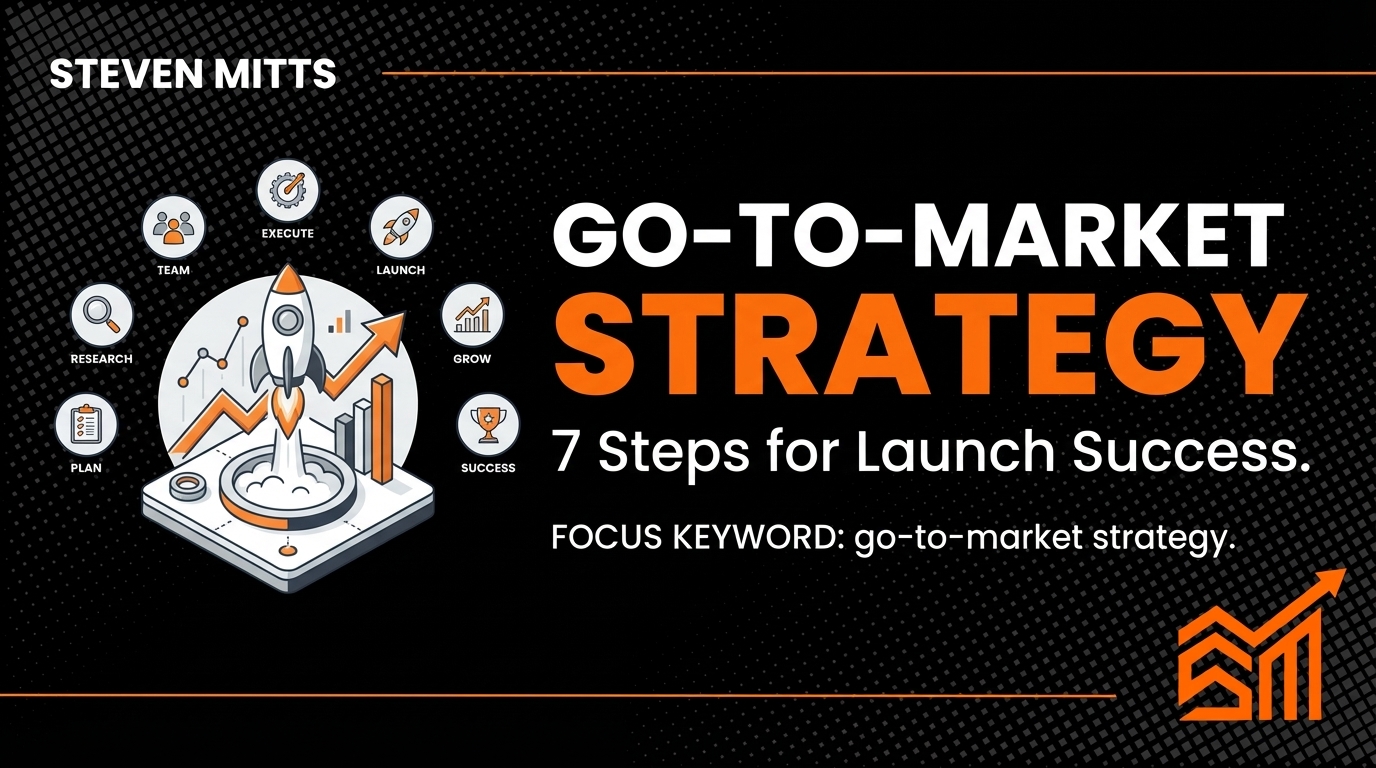
In the high-stakes world of product launches, it’s a cutthroat reality that only 10% succeed, leaving the rest floundering for market traction and profitability. This statistic isn’t just a number—it’s a wake-up call for any business aiming to introduce new products into today’s dynamic market. The stakes have never been higher.
The daunting task of carving out a product’s niche amidst fierce competition and shifting consumer trends is monumental. Companies grapple with aligning their products perfectly with market demands, often falling short due to complex market dynamics and inadequate planning. That’s exactly why I’ve crafted this indispensable guide. It’s specifically designed to help you navigate the perilous waters of product launches, providing the clarity and direction you need.
You’ll gain a complete understanding of building a robust go-to-market strategy through this guide. By following the detailed steps and insights outlined, you’ll be equipped to ramp up your market penetration and ensure sustained product success. This proven roadmap promises to transform your approach, potentially increasing your product launch success rate beyond the industry’s daunting statistics. Arm yourself with these strategies to achieve unprecedented results now.
Key Takeaways
-
✓
Discover how to define target markets for maximum engagement -
✓
Master your pricing strategy to boost competitive advantage -
✓
Learn to create compelling buyer personas that drive decisions -
✓
Implement omnichannel distribution models to enhance reach -
✓
Gain insights from case studies of successful product launches -
✓
Equip your team with a comprehensive market readiness checklist -
✓
Analyze key metrics to gauge your launch’s success effectively -
✓
Explore innovative testing strategies to reduce pre-launch risks
Schedule a free go-to-market strategy session
Get a 30-minute consult to map your GTM priorities, clarify positioning, and identify your fastest path to traction.
Table of Contents
- What Is a Go-To-Market Strategy and Why Does It Matter in 2026?
- Section 2: Elements of a Successful Strategy
- Section 3: Execution Tactics to Avoid Common Pitfalls
- Section 4: Leveraging Technology for GTM Strategy
- Section 5: Alignment and Team Collaboration
- Section 6: How to Measure Success and Track Results
- Section 7: Continuous Improvement and Market Adaptation
- How to Measure Success and Track Results
- Conclusion
- Frequently Asked Questions
What Is a Go-To-Market Strategy and Why Does It Matter in 2026?
A go-to-market (GTM) strategy is a comprehensive plan outlining how a company will engage its customer base and successfully deliver its product to the market. This strategy encompasses everything from identifying target audiences to creating effective messaging and selecting the optimal distribution channels.
In today’s fast-paced industry landscape, creating a successful product launch is more challenging than ever. Market saturation has increased competition, and consumer expectations are constantly evolving. Recent statistics highlight that approximately 70% of companies are leveraging AI tools for GTM planning to stay competitive and responsive to these changes. These technological advancements are essential not only to adapt to market demands but also to predict consumer behavior effectively.
The relevance of a robust GTM strategy is even more pronounced in 2026. The rapid pace of technological advancement and the volatile nature of consumer trends necessitate a flexible and thorough approach to bringing products to market. With fluctuating consumer preferences and emerging market opportunities, companies must adopt strategies that are both innovative and resilient to maintain momentum in a competitive landscape.
As we delve deeper into the process of crafting a GTM strategy, upcoming sections will provide insights into key elements of successful launches. This includes defining your target market, positioning your product, and deciding on effective pricing models. Understanding these foundational aspects will pave the way for building a strategy that not only meets but exceeds market expectations.
Section 2: Elements of a Successful Strategy
In the ever-evolving marketplace, crafting a successful go-to-market strategy (GTM) requires attention to detail and a structured approach. Understanding your target market, creating precise buyer personas, and aligning your product positioning with pricing strategies are essential components.
Target Market and Buyer Personas
Identifying your target market is foundational to any GTM strategy. It involves segmenting the market into specific groups that are most likely to benefit from your product. Developing accurate buyer personas is crucial because they enable the alignment of marketing efforts with customer needs and expectations. Apple serves as a perfect example: their product launches consistently resonate with tech-savvy consumers, ensuring their messaging aligns with these audience needs.
- Research industry trends to pinpoint potential market segments.
- Develop detailed customer profiles to guide advertising efforts.
- Align products with targeted consumer pain points for maximum impact.
Product Positioning and Pricing Strategy
Strategic product positioning determines how your product is perceived in the marketplace. Establish a clear position that emphasizes your product’s unique value propositions. Competitive pricing strategies, like those seen in Netflix’s subscription model, can differentiate your product.
Steps to Develop Positioning and Pricing:
- Identify key product benefits and align them with consumer needs.
- Analyze competitor pricing to set benchmark prices.
- Implement tiered pricing to offer value at different consumer levels.
Channels and Distribution Models
Selecting the right distribution channels is critical for reaching your target audience effectively. Integrating omnichannel strategies ensures consistent customer experiences across all platforms. Here’s a practical approach: Research competitors’ channels, map the customer journey, and create a plan that efficiently delivers your product.
📊 Case Study
Tech Pioneers increased their market penetration by 30% through a strategic GTM plan. They researched optimal channels and implemented omnichannel marketing to reach a broader audience.
“A strategic launch plan is vital for product success.”
💡 Quick Tip: Always ensure your product positioning aligns with your core brand values.
Section 3: Execution Tactics to Avoid Common Pitfalls
Executing a GTM strategy demands precision to circumvent potential pitfalls. By honing in on marketing execution and sales strategies, companies can sidestep missteps and achieve profound success.
Marketing Execution Tactics
Effective marketing execution relies on synchronized cross-channel campaigns. Begin by establishing a strong distribution network and empowering it with data-backed marketing.
- Utilize data-driven insights to inform marketing campaigns.
- Synchronize cross-channel marketing to ensure consistent messaging.
- Continuously monitor and adjust campaigns using real-time analytics.
Sales Strategies for Success
Sales Implementation Steps:
- Train teams on product features and competitive advantages.
- Use CRM tools to track customer interactions.
- Foster feedback loops to refine sales techniques.
Risk Mitigation During Launches
Counteract risks by employing innovative testing methods before fully launching products. Pre-launch trials can reveal potential issues before they impact sales.
📊 Case Study
Health Startups achieved robust market entry by targeting pre-launch trials. They identified gaps in product deployment, leading to a 40% increase in user retention post-launch.
“Go-to-market strategies align product goals with market demands.”
💡 Quick Tip: Always test marketing tactics in smaller batches before a full-scale rollout to mitigate risks.
Section 4: Leveraging Technology for GTM Strategy
Incorporating technology into your GTM strategy facilitates informed decision-making and operational efficiency. Embrace AI and other digital tools for enhanced market analysis and engagement strategies.
Integrating AI for Market Analysis
- Implement AI analytics to forecast market trends.
- Use predictive modeling to enhance customer segmentation.
Digital Engagement Platforms
Digital Engagement Steps:
- Adopt CRM systems for streamlined customer interactions.
- Utilize social media platforms for widespread outreach.
- Leverage automated email marketing to maintain customer engagement.
Benefits of Automated Processes
Automation streamlines operations, enabling teams to focus on strategy and innovation.
📊 Case Study
An emerging software firm improved sales efficiency by 25% through strategic automation of workflow processes. By prioritizing essential tasks and eliminating redundancies, productivity soared.
“The integration of AI in GTM strategies is a transformative step toward greater efficiency.”
💡 Quick Tip: Automate repetitive tasks to allow your team to concentrate on more complex strategy elements.
Download our product launch guide
Get the step-by-step playbook—including templates, timelines, and scorecards—to plan and execute a winning launch.
Section 5: Alignment and Team Collaboration
Successful GTM strategies require robust collaboration across different teams. Synchronizing product, marketing, and sales efforts ensures that product launches are seamless and impactful.
Cross-Functional Team Dynamics
- Establish clear roles and responsibilities to avoid redundancy.
- Encourage interdisciplinary workshops for enhanced collaboration.
Interdepartmental Communication
Communication Steps:
- Regularly organize update meetings.
- Foster a culture of open feedback.
- Utilize project management tools for transparent tracking.
Impact of Unified Messaging
📊 Case Study
By aligning their teams, a consumer electronics company noted a 15% increase in internal communication speed, resulting in faster project delivery times.
“A unified team approach is the bedrock of a successful GTM strategy.”
💡 Quick Tip: Implementing weekly sync meetings can effectively streamline team alignment and project momentum.
Section 6: How to Measure Success and Track Results
Assessing the effectiveness of your GTM strategy through key metrics provides insights needed for ongoing optimization. Define benchmarks and utilize advanced tools to gauge success.
Key Performance Indicators (KPIs)
- Focus on customer acquisition cost (CAC) and lifetime value (LTV).
- Track brand awareness metrics via social engagement.
Analyzing Data Tools
Data Analysis Steps:
- Employ Google Analytics for website traffic insights.
- Use HubSpot for marketing performance metrics.
- Monitor market share growth through Tableau analytics dashboards.
Benchmarks and Strategic Pivots
📊 Case Study
A tech startup used rigorous data tracking to identify a growth plateau and pivoted its strategy to achieve a 20% increase in market share within 12 months.
“Regular measurement and adjustment of strategies keep companies on the path to growth.”
💡 Quick Tip: Reviewing benchmark data quarterly allows for timely pivots and sustained strategy alignment.
Section 7: Continuous Improvement and Market Adaptation
Lastly, understanding market dynamics and constantly refining your strategy is key to maintaining a competitive edge. Continuous learning and flexibility ensure long-term success.
Adaptability to Market Changes
- Monitor industry trends and adjust accordingly.
- Anticipate market needs before competitors.
Long-Term Strategy Evolution
Strategy Development Steps:
- Review annual performance metrics.
- Incorporate customer feedback into future product improvements.
- Invest in R&D for continuous product enhancement.
Importance of Feedback Loops
📊 Case Study
A leading e-commerce business saw a 30% enhancement in customer satisfaction by instituting robust feedback mechanisms.
“Continuous improvement is the lifeline of sustainable market success.”
How to Measure Success and Track Results
Measuring the success of your go-to-market (GTM) strategy is crucial to understanding its impact on your product launch and overall business growth. In a rapidly evolving market, where expectations shift and consumer behaviors change continuously, establishing clear metrics allows you to quantify performance and make informed adjustments to your strategy. With the right approach, you can clearly see what’s working, identify areas for improvement, and ensure your product meets its commercialization goals.
Key Metrics to Track
Primary Metrics:
- Customer Acquisition Cost (CAC): This metric measures the total cost associated with acquiring a new customer, including marketing, sales, and promotion expenses. Target: Aim for a CAC that is below 30% of your customer’s Lifetime Value (LTV).
- Lifetime Value (LTV): LTV estimates the total revenue a customer will generate throughout their relationship with your brand. Target: Aiming for an LTV of 3x your CAC is considered a healthy ratio.
- Market Share Growth: This measures the percentage increase of your sales compared to the total sales across the industry. Target: Set a goal to achieve at least a 20% growth in market share within the first year post-launch.
Tools for Measurement
Recommended Tools:
- Google Analytics: Essential for tracking website traffic, user behavior, and conversion rates. It provides insights into customer engagement, allowing you to evaluate campaign effectiveness.
- HubSpot: A powerful CRM and marketing platform that can track and manage customer interactions while offering detailed analytics on marketing efforts and performance metrics.
- Tableau: This data visualization tool enables you to analyze complex data sets and track KPIs over time, helping you to make sense of your metrics and present insights clearly to stakeholders.
How to Interpret Your Results
Understanding your results is just as vital as measuring them. Good results typically show a steady decline in CAC while maintaining or increasing LTV. If your LTV starts to stagnate or decline, it may signal the need to revisit your product offerings or customer engagement tactics.
Warning signs to watch for include a significant rise in CAC or stagnant market share growth, which could indicate ineffective marketing strategies or misalignment with consumer needs. In such cases, don’t hesitate to adjust your strategy; consider conducting additional market research or modifying your messaging.
Success Benchmarks:
- Month 1: Expect to acquire your first 50 customers and aim for a CAC that’s manageable.
- Month 3: Target a 10% increase in customer email opt-ins and a clear upward trajectory in website traffic.
- Month 6: Strive to achieve at least 15% market share growth and ensure your CAC shows a steady decline.
Regularly monitoring these metrics and adjusting your GTM strategy as necessary ensures your product’s successful market introduction and lays the foundation for long-term growth and sustainability.
Conclusion
A well-crafted go-to-market strategy is not just a roadmap; it is the lifeblood of your product’s success in a competitive landscape. As we’ve discussed, aligning your innovations with market needs can dramatically increase your chances of achieving a successful launch.
To kickstart your journey, take these actionable steps today: First, conduct thorough market research to understand your audience’s pain points. Next, dedicate this week to developing precise buyer personas that reflect your ideal customers. Finally, set aside this month to align your cross-functional teams—ensuring everyone is on the same page regarding the product’s goals and target market.
Mastering a strategic approach to market entry can propel your business toward significant growth and brand recognition. Imagine transforming your product into a market leader, driving sustainable revenue and cultivating a loyal customer base. This connection between product innovation and customer engagement is your key to unlocking long-term success.
Now is the time to act. Join our upcoming webinar to dive deeper into advanced go-to-market strategies that can revolutionize your approach. Don’t miss this opportunity—secure your spot today and take the first step towards transforming your product vision into reality!
Enroll in our go-to-market strategy course
Build your GTM from scratch with on-demand lessons, worksheets, and real-world case studies to accelerate your next launch.
Frequently Asked Questions
What is a go-to-market strategy?
A go-to-market (GTM) strategy is a comprehensive blueprint designed to align a product’s offerings with market demands, ensuring effective delivery upon launch. It encapsulates aspects such as target audience identification, marketing messaging, and sales process alignment. According to Gartner’s 2025 analysis, organizations employing structured GTM strategies saw a 50% increase in product adoption rates.
How does a go-to-market strategy ensure product launch success?
A well-crafted go-to-market strategy minimizes risks associated with product launches by providing clarity on market entry, positioning, and customer engagement tactics. It enables organizations to align internal teams, focus marketing efforts, and apply insights from market research to address specific consumer needs. As noted, success rates for GTM strategies can rise by up to 30% with thorough planning and execution.
What are the key components of a go-to-market strategy?
Key components of a GTM strategy include defining target markets and buyer personas, product positioning, pricing strategy, and selecting appropriate distribution channels. Each element plays a crucial role in capturing audience interest and enhancing overall product visibility. A strong GTM strategy considers competitor analysis and customer journeys to align product features with consumer expectations effectively.
How long does it take to develop a go-to-market strategy?
The timeline for developing a go-to-market strategy can vary, but it typically ranges from 4 to 12 weeks, depending on the complexity of the product and market conditions. Engaging cross-functional teams early in the process can expedite development. Each stage should be thoroughly reviewed to ensure alignment with customer needs and market trends, leading to a stronger launch.
Why isn’t my product launch gaining traction despite a solid strategy?
Lack of traction during a product launch can occur for several reasons, including misalignment between product messaging and customer expectations, ineffective marketing channels, or untimely market entry. It may be beneficial to reassess market research and gather feedback to identify areas for improvement. Additionally, monitoring key performance indicators (KPIs) can provide insights to pivot strategies effectively.