
MODULE 6 — PRICING & REVENUE MODELS
Designing how money moves through your business
Key Questions This Module Answers
- How should founders think about pricing?
- When is underpricing strategic vs dangerous?
- How do revenue models affect cash flow and stress?
Estimated reading time: 22 minutes
Difficulty level: Moderate to Hard
Related module: Module 5 — Business Model Design
MODULE OVERVIEW
By now, you’ve made several foundational decisions.
You’ve:
- clarified founder fit and readiness
- chosen viable business directions
- researched markets and competition
- selected a specific problem
- designed a business model you can operate
Now comes a decision that many founders either rush, avoid, or treat emotionally:
How do you price what you’re building — and how does revenue actually flow?
This module helps you:
- understand pricing as a designed system, not a number
- separate inputs from outputs
- choose revenue models that fit your business and constraints
- avoid common pricing traps without becoming dogmatic
- preserve flexibility where it matters
Pricing decisions influence far more than revenue; they shape customer behavior, determine how quickly a company learns from the market, and materially affect cash flow and operational pressure.
Why This Module Matters
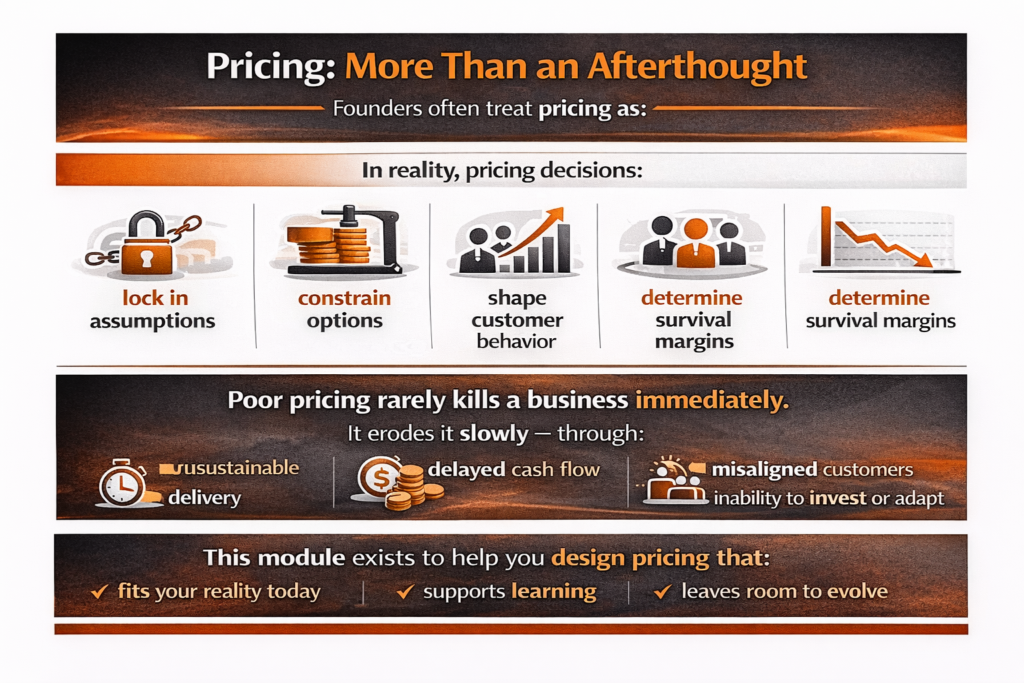
Pricing as a Design Constraint (Not Just an Output)
Pricing can be viewed as:
- an output of market research, and
- a design constraint you intentionally lock early
When you lock certain pricing assumptions early, you:
- force clarity on who the business is for
- constrain scope and complexity
- surface whether the model actually works
- accelerate learning
The goal is not to get pricing “right” immediately.
The goal is to get information, then architect a path forward that:
- fits who you are
- fits the business you’re building
- can be optimized over time
This playbook gives guidance based on:
- industry best practices
- common patterns
- proven tradeoffs
But it also helps founders adjust based on:
- the constraints they’ve identified for themselves
- even when that deviates from the so-called “best path”
No universal price exists for a product or service. Effective organizations treat pricing as a deliberate design decision rather than allowing it to emerge accidentally. (replace if Steven approves)
Pricing as a System: Inputs → Decisions → Outputs
A useful way to think about pricing is as a system.
You don’t start with a number.
You start with inputs.
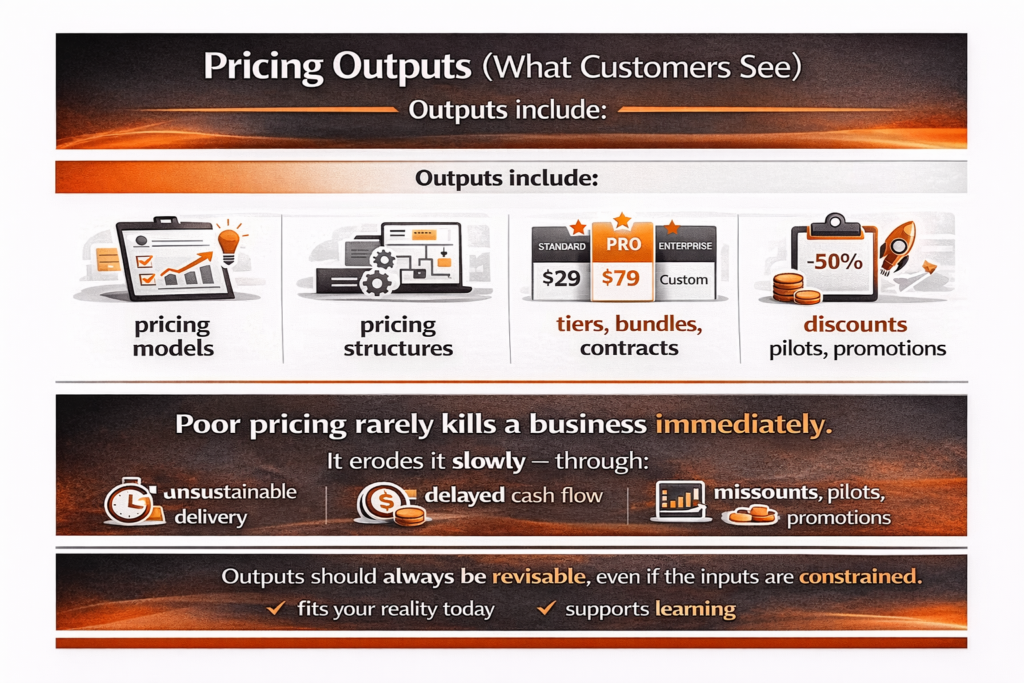
Pricing Inputs (What You Must Account For)
Market Inputs
- willingness to pay
- price sensitivity
- cost of doing nothing
- competitive alternatives
Cost & Structure Inputs
- COGS
- delivery and support costs
- buy vs build decisions
- operational complexity
Demand & Timing Inputs
- urgency vs curiosity
- maturity of the market
- adoption friction
- learning speed needed
Strategic Inputs
- cash flow needs
- growth vs profitability goals
- founder time and energy
- tolerance for risk and volatility
Pricing stability depends on understanding its inputs.
When those inputs are ignored, the resulting structure tends to be fragile. (Replace if Steven Approves
Pricing Decisions (Where Design Happens)
This is one of the most underestimated aspects of business design.
1
Based on those inputs, founders make decisions about:
- pricing logic
- revenue model
- where to be flexible
- where to lock assumptions
2
These decisions determine:
- who says yes
- who says no
- how fast you learn
- how stressed the business becomes
Business Model Snapshots (Intentional Contrast)
SM Services (Steven Mitts Services)
- Services-Led, Cash-Flow First
- underpricing risk = time leakage and burnout
- flexibility lever = packaging, scope boundaries, retainers
Lesson:
Pricing must protect founder time before it optimizes growth.
pricing tied to scope, retainers, and execution value
Aware Monitoring Systems
- Product + Subscription + Maintenance
- upfront sales with delayed revenue realization
- pricing constrained by procurement, budgets, and risk tolerance
- flexibility lever = pilots, phased rollouts, maintenance tiers
Lesson:
Pricing must align with buyer processes, not founder preference.
Full Spectrum Imaging
- R&D Services, Grants, Long Timelines
- pricing influenced by credibility and outcomes
- non-linear revenue cycles
- flexibility lever = milestone-based pricing, phased work
Lesson:
Pricing must survive long gaps between progress and cash.
IV20 Spirits
- Physical Product, Wholesale + Retail Distribution
- pricing constrained by:
- COGS
- distributor margins
- retailer markups
- consumer price sensitivity
- underpricing risk = margin collapse
- flexibility lever = SKUs, channel mix, promotions, pack sizes
Lesson:
Some pricing constraints must be locked early to keep the business viable.
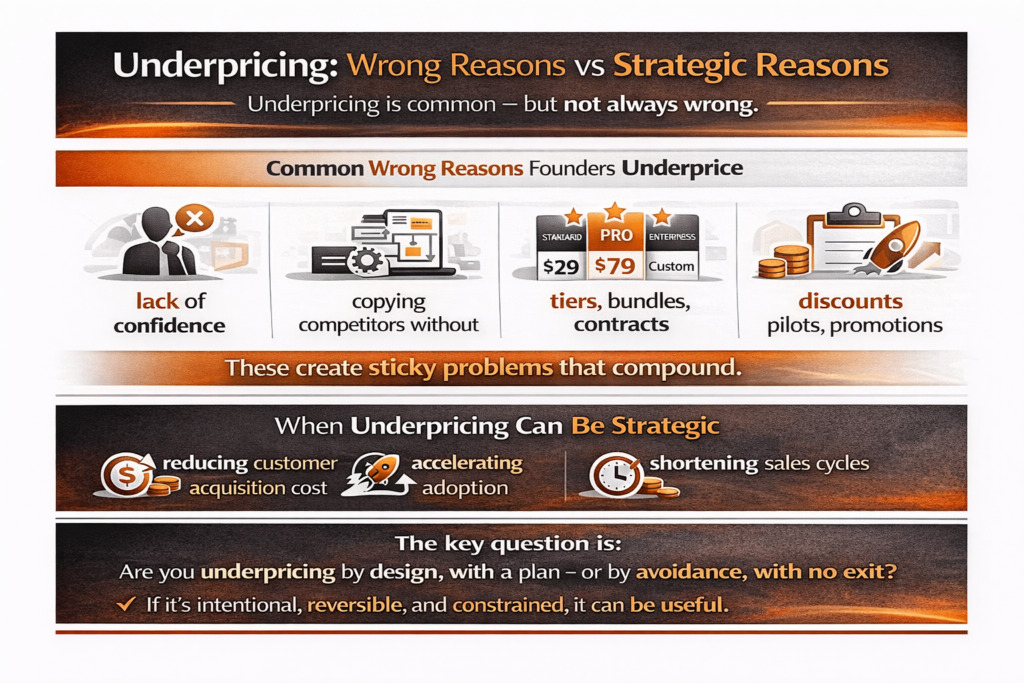
Flexibility vs Rigidity in Pricing
Early-stage pricing should balance:
- flexibility to learn
- rigidity where survival depends on it
Good places to preserve flexibility:
- packaging
- discounts and pilots
- contract length
- bundling
Places to be careful:
- pricing below cost
- models that scale stress faster than revenue
- assumptions that require perfect execution
Design pricing so it can evolve without breaking the business.
Tool for This Module: Pricing Inputs & Tradeoffs Worksheet
This worksheet helps you:
- list and weight pricing inputs
- identify non-negotiable constraints
- choose where to lock vs experiment
- connect pricing decisions to business reality
This is a living tool — like all frameworks in this playbook.
Blog & Learning
Pricing mistakes are common — and avoidable.
Key Takeaways
By the end of this module, you should:
- understand how business model decisions shape daily operations
- see how money flow is designed, not accidental
- recognize where pressure will show up first
- feel intentional about the tradeoffs you’re making
- maintain flexibility without drifting
Recognizing misalignment early improves long-term outcomes.

Optional Support
If this module raised questions about how your business will actually operate, you don’t have to figure it out alone.
Many founders find it helpful to review their business model with a neutral second set of eyes before moving forward.
What Comes Next
With a business model defined, the next step is deciding how you charge and how revenue scales.