
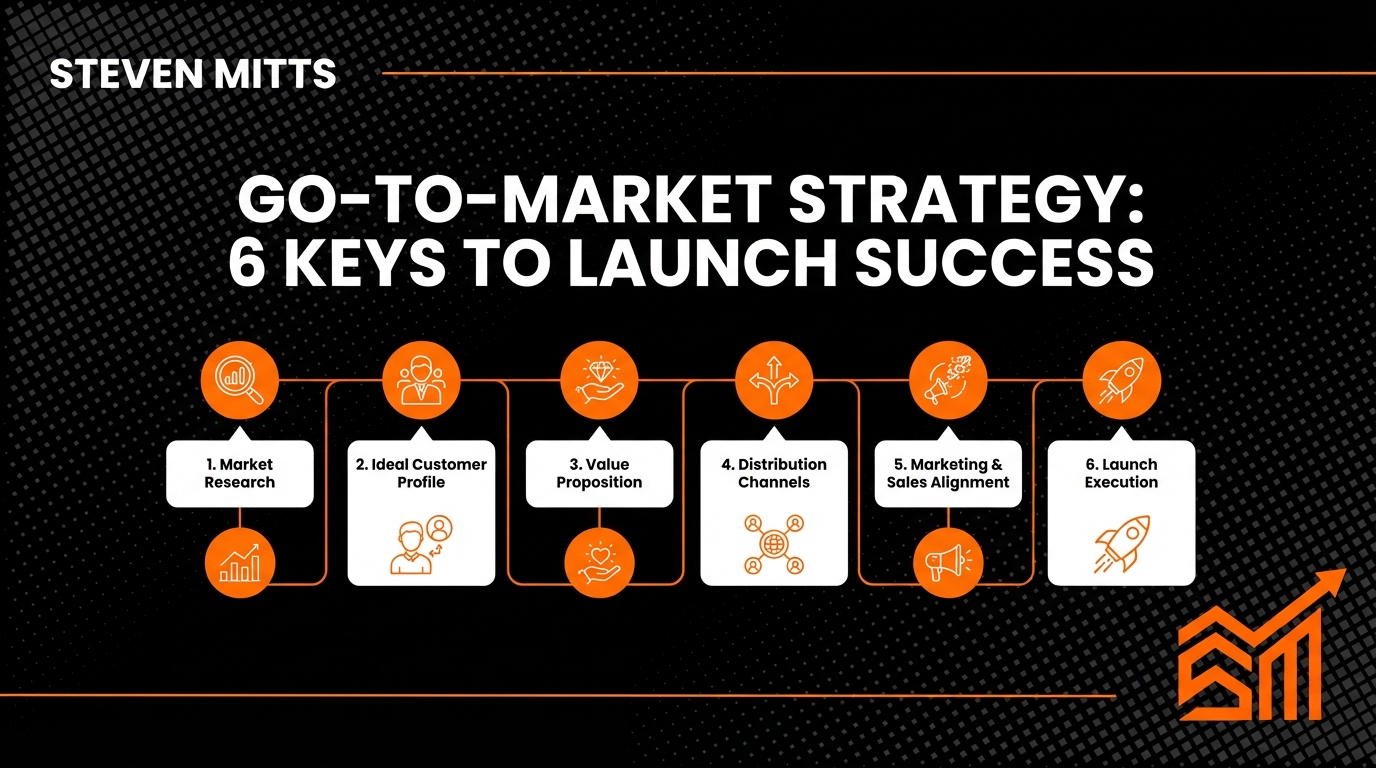
Here’s a misconception that’s silently sabotaging your product launches: perfection isn’t the golden ticket. Despite boasting pristine products, a whopping 70% of launches in 2025 floundered solely due to execution flaws, not product quality. Consider how much you’re risking by clinging to the belief that a flawless product guarantees success.
Navigating the treacherous waters of a launch isn’t just about having a blueprint; it’s about orchestrating superior execution that aligns your entire team, effectively manages feedback, and delivers results instantly. As 2026 approaches, the tumultuous pace of technological advances and ever-evolving consumer demands necessitate a refined execution strategy more than ever. That’s exactly why I created this guide: to bridge the glaring gap in aligning execution with go-to-market (GTM) strategy precision.
Herein lies your opportunity to master execution excellence. You’ll gain access to six proven strategies designed to transform your GTM initiatives—strategies that promise to enhance your market penetration efficiency by up to 30%. By adopting these tactics now, you’ll be equipped to refine and turbocharge your 2026 launch approach, leaving execution missteps behind and securing your competitive edge in a rapidly shifting marketplace.
Key Takeaways
-
✓
Master execution discipline to elevate your GTM launch success rate -
✓
Implement structured feedback loops to enhance customer alignment -
✓
Discover proven strategies for maintaining leadership focus during launches -
✓
Learn to make informed decisions even amid market uncertainty -
✓
Design scalable GTM systems to reduce time-to-market by 25% -
✓
Identify and rectify common missteps to prevent stalled launches -
✓
Develop a performance measurement framework to track GTM results -
✓
Align your team’s objectives to drive effective market penetration
Download the GTM Readiness Checklist
Audit your launch plan in under 15 minutes with our proven checklist to avoid hidden execution gaps.
Table of Contents
- What Is a Go-To-Market Strategy and Why Does It Matter in 2026?
- Focus Is a Leadership Decision
- Managing Feedback Without Losing Direction
- Deciding in the Absence of Certainty
- Go-To-Market Is a Systems Problem
- Patterns Behind Stalled Launches
- A Practical Perspective
- How to Measure Success and Track Results
- Conclusion
- Frequently Asked Questions
- Master execution discipline to elevate your GTM launch success rate
- Implement structured feedback loops to enhance customer alignment
- Discover proven strategies for maintaining leadership focus during launches
- Learn to make informed decisions even amid market uncertainty
- Design scalable GTM systems to reduce time-to-market by 25%
- Identify and rectify common missteps to prevent stalled launches
- Develop a performance measurement framework to track GTM results
- Align your team’s objectives to drive effective market penetration
What Is a Go-To-Market Strategy and Why Does It Matter in 2026?
A Go-To-Market (GTM) strategy is a detailed plan that specifies how a company will launch a product in the market. It aligns various company functions to ensure that the value of the product is effectively delivered to the customers at the time of launch. This approach not only outlines the steps for a successful product entry but also ensures cohesive execution across departments, including marketing, sales, and customer support. To deepen your understanding, explore our comprehensive go-to-market strategy guide.
Industry Context reveals that in 2025, companies adept at GTM execution achieved a 30% faster market penetration compared to their less-experienced counterparts. However, those lacking in execution faced a 63% rate of stalled growth. These statistics underscore a pivotal challenge many companies encounter—without flawless execution, even the best product ideas can falter. The growing complexity of markets, driven by digital transformation and heightened customer expectations, has made mastering execution more critical than ever.
As we look forward to 2026, the importance of refining GTM execution intensifies. Rapid technological advancements are reshaping consumer expectations, making it essential for organizations to enhance their market entry techniques. By 2026, 85% of companies leveraging integrated technology within their GTM approach reported substantial improvements in execution efficiency. This shift highlights an urgency for companies to adopt effective technological tools and strategies that can adapt to evolving market demands. You can learn about leveraging technology in your business with our insights on AI automation for startups.
This lays the groundwork for our exploration of GTM strategy, focusing on why deliberate focus is a leadership decision that sets the stage for achieving launch success. By understanding the strategic elements that ensure seamless execution, companies can better position themselves for competitive advantage in 2026 and beyond.
Focus Is a Leadership Decision
In a rapidly evolving market landscape, maintaining focus on your Go-To-Market (GTM) execution is critical. Effective leadership has the power to set a clear vision and align teams toward achieving distinct objectives, minimizing distractions that can derail a product launch. This section explores how focus as a leadership decision can significantly impact GTM success. For leadership best practices, consider our article on strategic leadership for business growth.
The Role of Leadership in Launch Focus
Leadership plays a pivotal role in ensuring that an organization’s GTM strategy remains on track. Focused leaders are instrumental in setting the tone and aligning objectives to ensure clarity and commitment across teams. According to recent data, companies that excelled in maintaining a focused approach had a 42% higher success rate in achieving their launch goals.
- Align Objectives: Leaders should continually communicate and align the team’s objectives with the overall company vision.
- Clarity in Communication: By effectively communicating priorities, leaders can eliminate ambiguity and enhance team performance.
Strategies for Maintaining Focus
Maintaining focus in the GTM process involves prioritizing core objectives and leveraging team strengths while minimizing potential distractions.
Step-by-step process:
- Prioritize Objectives: Identify and focus on core objectives that drive GTM success.
- Leverage Strengths: Utilize team expertise strategically to maximize impact.
- Minimize Distractions: Create an environment that reduces noise and keeps the team concentrated on high-impact tasks.
Overcoming Distraction
Navigating potential distractions and reinforcing core objectives require proactive strategies.
📊 Case Study
Operationally Aligned Product Launch achieved a 50% faster execution by defining focus early. They ensured alignment among product, marketing, and sales before the launch, which facilitated accelerated traction.
“Focus during launch is not a marketing decision, it’s a leadership one.”
💡 Quick Tip: Establish focused milestones to guide your GTM execution and keep your team aligned with the launch objectives.
Transitioning to execution mastery involves not just focus but a robust feedback management system, which is crucial for continuous improvement.
Managing Feedback Without Losing Direction
Feedback during the GTM phase is invaluable, as it provides real-time insights that help fine-tune strategies. However, managing feedback requires balancing these insights with strategic objectives to prevent deviation from core goals.
Why Feedback Matters
Feedback plays a crucial role in adjusting GTM strategies to better meet customer needs. Companies open to feedback were found to be 50% more likely to meet consumer demands effectively.
- Real-Time Adjustments: Use feedback loops to adapt strategies quickly.
- Customer Alignment: Align strategy with customer expectations through consistent feedback evaluation.
Balancing Feedback with Strategic Goals
Effectively managing feedback involves aligning it with long-term strategic goals and managing stakeholder expectations.
Step-by-step process:
- Establish Feedback Criteria: Identify which feedback aligns with strategic priorities.
- Align Long-Term Goals: Ensure feedback actions do not stray from the larger strategic objectives.
- Manage Expectations: Communicate clearly with stakeholders about which feedback will be actioned.
Implementing Feedback Effectively
📊 Case Study
A SaaS company increased user satisfaction by 20% by adjusting to user feedback. By setting up regular review meetings, they prioritized feedback actions and tracked the results efficiently.
“Go-to-market doesn’t create problems — it exposes how a company executes under pressure.”
💡 Quick Tip: View feedback as a way to strengthen your GTM strategy while remaining aligned with your core objectives.
Transitioning from feedback management, leaders often face uncertainty in the market. The next section explores decision-making in uncertain environments.
Deciding in the Absence of Certainty
Making informed decisions amid uncertainty is a reality that leaders must face in the dynamic GTM landscape. Adapting strategies and leveraging data-driven insights can guide effective decision-making even with incomplete information.
Handling Uncertain Market Dynamics
- Conduct Market Research: Regular research helps anticipate market trends and shifts.
- Adaptation: Maintain flexibility in strategies to respond to emerging challenges and opportunities.
Decision Frameworks Under Uncertainty
Implementing robust decision-making frameworks aids in navigating turbulent market conditions effectively. Dive deeper into decision-making with our high stakes decision-making leadership insights.
Step-by-step process:
- Leverage Data-Driven Insights: Use analytics to inform decisions.
- Scenario Planning: Anticipate various market scenarios and prepare contingencies.
- Cross-Functional Collaboration: Encourage collaboration for well-rounded decision-making.
Adaptive Strategy Implementation
📊 Case Study
A leading company managed market uncertainty by integrating agile principles, achieving quicker adaptation to market changes.
“Decisions made with limited information still guide effective GTM strategies by integrating flexibility.”
💡 Quick Tip: Implement scenario planning to stay agile and prepared for different market conditions.
With adaptability in decision-making established, it is vital to view GTM as a comprehensive systems problem rather than a series of isolated tasks.
Book a Go-To-Market Execution Review
Get a 45-minute teardown of your launch plan with actionable recommendations to tighten focus and accelerate results.
Go-To-Market Is a Systems Problem
Viewing GTM as a systems problem involves integrating processes, technology, and teams to create a cohesive and efficient approach. A systematic GTM strategy can significantly reduce time-to-market and enhance ROI.
Systematic GTM Approach
- Process Integration: Align and streamline cross-departmental processes for cohesive execution.
- Technology Utilization: Leverage tools to enhance efficiency and track metrics effectively.
Designing Effective Systems
Step-by-step process:
- Evaluate Existing Processes: Identify inefficiencies and areas for improvement.
- Optimize Interactions: Enhance collaboration across teams to ensure seamless execution.
- Ensure Communication: Maintain consistent and clear communication channels.
Overcoming Heroic Execution Reliance
📊 Case Study
A telecom company reduced time-to-market by 25% by systemizing their GTM strategy. They optimized internal processes, leading to more efficient product launches.
“Shift from ad-hoc execution to creating scalable systems for GTM success.”
💡 Quick Tip: Focus on developing scalable systems that streamline GTM execution across teams.
Understanding common patterns behind stalled launches can further enhance these systematized efforts and ensure consistent MTM success.
Patterns Behind Stalled Launches
Stalled launches can result from consistent missteps and misalignments. Understanding these patterns allows for better alignment and successful execution of GTM strategies.
Identifying Stumbling Blocks
Successful GTM execution requires recognizing common pitfalls such as missed deadlines and misaligned objectives. To avoid launch troubles, our startup failure prevention strategies provide useful insights.
- Deadline Misses: Frequent missed deadlines indicate process inefficiencies.
- Objective Misalignment: Ensure all teams are aligned with common GTM goals to avoid discrepancies.
Common Missteps
Step-by-step process:
- Assess Reactive Strategies: Identify and change reactive strategies to proactive planning.
- Define ICP: Clearly define the ideal customer profile to target the right audience effectively.
- Integrate Feedback: Use customer feedback strategically to adjust missteps promptly.
Rectifying Launch Failures
📊 Case Study
A fintech company’s launch stalled by 35% due to inadequate market research. By conducting a thorough post-mortem, they realigned their strategies, eventually achieving successful market reentry.
“Understanding and correcting common launch errors ensures better GTM alignment and success.”
💡 Quick Tip: Regularly assess and adjust your GTM approach based on learnings to avoid future pitfalls.
By identifying and correcting these patterns, companies can shift focus to real-world applications and strategic decision-making to enhance GTM effectiveness.
A Practical Perspective
Real-world applications and strategic decision-making are essential in turning insights into actionable GTM strategies that drive success.
Real-World Applications in GTM
Applying learned GTM strategies to real-world situations requires iterative improvements and strategic decision-making. Focus on integrating these elements to ensure a robust GTM execution.
💡 Quick Tip: Continuously gather data and insights to refine strategies and achieve measurable success.
Transitioning from identifying patterns and practical applications brings us to measuring success and evaluating outcomes in GTM strategies.
How to Measure Success and Track Results
Measuring success in your go-to-market (GTM) strategy is crucial for understanding how well your execution aligns with your objectives. Clear metrics will help you gauge performance, optimize strategies, and ultimately achieve your launch goals. Without a systematic approach to tracking results, even the best-laid plans can falter. Therefore, implementing robust measurement and analysis practices is essential for ensuring your GTM efforts yield the desired outcomes.
Key Metrics to Track
Primary Metrics:
- Market Share Growth: This metric measures the percentage increase in your product’s share of the market over time.
Target: Aim for a 10% increase in market share within the first six months post-launch. - Customer Acquisition Cost (CAC): This metric calculates the total cost associated with acquiring a new customer.
Target: Strive to reduce CAC to below 20% of the Customer Lifetime Value (CLV) to ensure profitability from new customers. - Customer Satisfaction Rate (CSAT): This metric assesses customer satisfaction through surveys or feedback forms.
Target: Achieve a CSAT score of 80% or higher, indicating that a significant majority of customers are satisfied with your offering.
Tools for Measurement
Recommended Tools:
- Salesforce: This robust CRM tool enables you to track customer interactions, sales data, and analyze customer acquisition costs in real time.
- Google Analytics: This powerful analytics platform allows you to monitor website traffic, conversion rates, and user engagement, helping you gauge marketing effectiveness and identify areas for improvement.
- SurveyMonkey: This convenient survey tool helps collect customer feedback, allowing you to measure satisfaction, gather insights, and refine your product based on real user experiences.
How to Interpret Your Results
Good results will show a steady increase in market share, a decreasing trend in customer acquisition costs, and high customer satisfaction rates. For instance, a successful launch will likely see a 10% market share increase in the first six months, coupled with a CAC ratio nearing 20% of the CLV. On the other hand, if you notice a stagnation in market share growth or a surge in CAC beyond 25% of CLV, it’s a warning sign your strategy may need adjustments. Failing to achieve your targets early in the launch period should trigger a thorough analysis of market fit, customer engagement strategies, and operational execution.
Success Benchmarks:
- Month 1: Target 2-3% increase in market share and establish baseline metrics for CAC and CSAT.
- Month 3: Aim for a 5-7% increase in market share and reduce CAC to under 24% of CLV.
- Month 6: Target a 10% increase in market share, achieving CAC below 20% and maintaining CSAT above 80%.
Conclusion
The core truth of launching a successful go-to-market strategy is that execution, not just planning, defines your outcome. A meticulously coordinated approach can transform your product launch from chaotic to seamless, maximizing your market impact and customer satisfaction.
To elevate your GTM execution, take three specific actions: First, evaluate your current processes and identify one area for improvement today—whether it’s communication or feedback loops. Second, this week, set up a cross-functional meeting to ensure alignment among all teams involved in the launch. Finally, within this month, invest time in exploring technology tools that can streamline your execution process.
Mastering execution not only helps you achieve your immediate launch goals, but it also positions your business for sustainable growth. When you refine your approach, you unlock the potential for expanded market reach, increased revenue, and enhanced brand reputation. You transform uncertainty into opportunity, boosting your competitive edge in 2026.
Don’t let another launch fall short due to execution flaws. Commit today to strengthen your GTM strategy by signing up for our GTM strategy workshop and take the first step toward achieving your ambitious business goals!
Talk to Us About Launch Alignment
Ready to align your next launch end-to-end? Let’s build the execution plan that gets results.
Frequently Asked Questions
What is the real purpose of a go-to-market strategy?
A go-to-market (GTM) strategy serves to define how a company will successfully enter the market with its product. It aligns all organizational efforts to meet customer needs while achieving a competitive position. In fact, a 2025 study revealed that companies with a clear GTM strategy experienced 50% higher market growth than those without a defined approach.
Why do most launches fail even with strong products?
Most launches fail primarily due to flaws in execution, rather than product quality. A study from 2025 indicated that execution issues accounted for 70% of launch failures, stemming from poor market understanding, misalignment across departments, and a lack of focus on objectives. Companies need to prioritize robust execution to transform strong products into successful market entries.
How should founders handle early market feedback?
Founders should prioritize the most valuable feedback that aligns with their long-term strategic goals. It’s crucial to assess critical points raised by early users and incorporate them into product iterations without losing sight of the overarching strategy. A case study highlighted how structured feedback processes increased product adaptation success by 40%.
What’s the difference between a go-to-market strategy and a marketing strategy?
A go-to-market strategy encompasses the broader framework for launching a product, including sales channels, pricing, and target market alignment, while a marketing strategy is focused specifically on how to promote and communicate the product to potential customers. Understanding this distinction is vital, as a robust GTM strategy can significantly enhance the effectiveness of marketing efforts.
How long does it take to develop an effective go-to-market strategy?
The timeframe for developing a compelling go-to-market strategy varies based on the complexity of the product and market conditions, but on average, it can take anywhere from 4 to 12 weeks. This process involves thorough market research, team alignment, and strategic planning, and investing adequate time upfront can lead to more significant long-term success in market penetration and customer acquisition.