
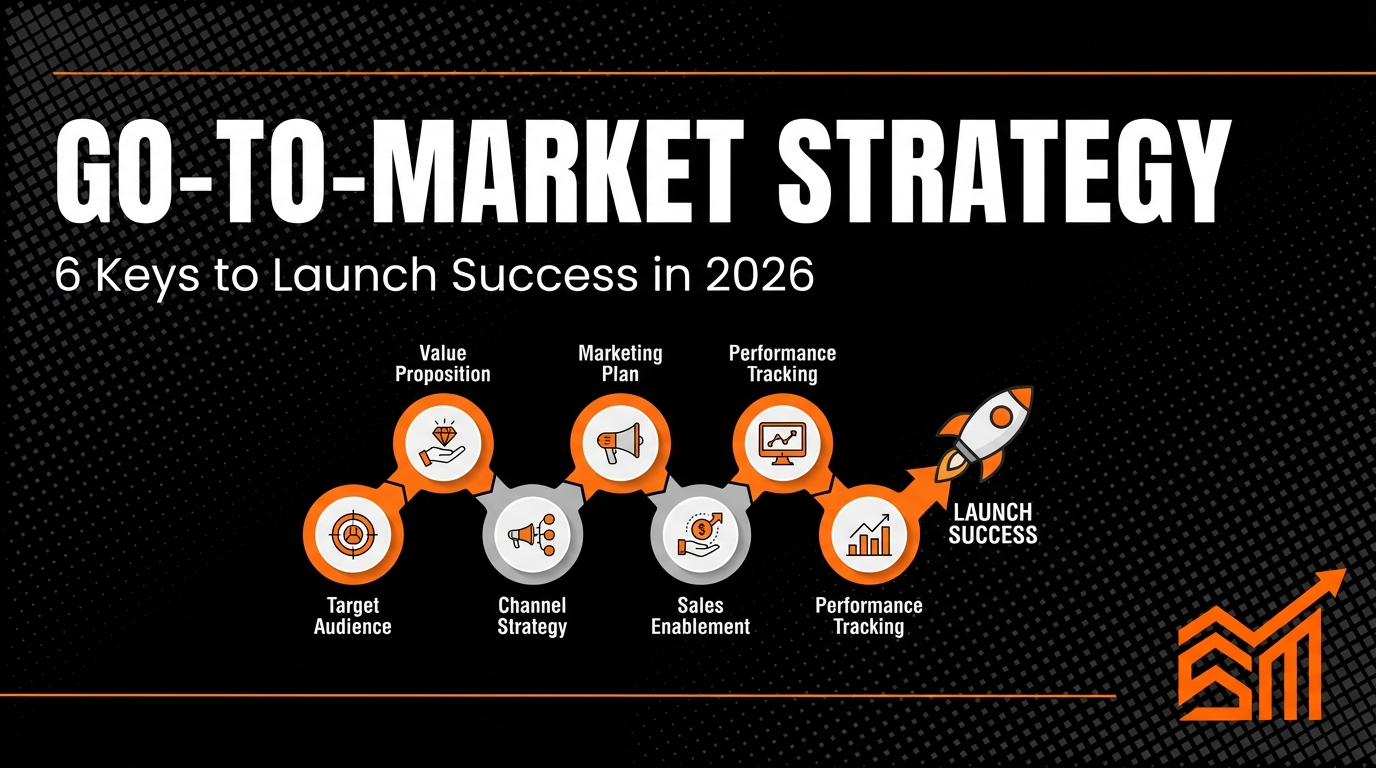
Why do 75% of product launches fail?
Estimated reading time: 12 minutes
It’s a staggering number, mirroring the frustration of businesses that invest millions in innovative products only to find their efforts floundering in the turbulent market waters. Launch failure often stems from flawed execution, leaving companies grappling with disappointing performances despite stellar product designs.
Your team faces immense pressure in 2026’s fast-paced business landscape. As markets evolve and competition intensifies, aligning functions and making split-second strategic decisions become essential. This conundrum demands a robust go-to-market strategy, yet many falter not in innovation but in the execution of their market entry. That’s exactly why I created this guide: to redefine how you approach launch execution and help you navigate the complexities of the process with confidence.
By diving into this comprehensive 2026 guide, you’ll gain an advanced understanding of the critical elements of a successful go-to-market strategy. You’ll discover six proven tactics to fortify your launch execution, aiming to increase your market penetration by 30% and ensure sustained growth. Equip yourself now with actionable insights and a strategic framework to transform your product launch from a potential failure into a resounding success in the coming year.
Key Takeaways
- ✓ Discover crucial execution elements to enhance your 2026 launch strategy
- ✓ Implement customer feedback loops to continuously refine your approach
- ✓ Master leadership alignment to synchronize product, sales, and marketing efforts
- ✓ Learn actionable decision-making techniques amidst uncertainty for robust outcomes
- ✓ Develop systematic processes that replace heroic efforts for consistent success
- ✓ Identify and mitigate common launch pitfalls before they derail your project
- ✓ Optimize metrics to track success and make informed strategic adjustments
- ✓ Create a GTM checklist to streamline your launch execution process
Download the GTM Readiness Checklist
Get a proven, step-by-step checklist to align teams, de-risk your launch, and accelerate market penetration.
Table of Contents
- What Go-To-Market Reveals About Execution in 2026
- Focus Is a Leadership Decision in GTM
- Managing Feedback Without Losing Direction
- Deciding in the Absence of Certainty
- Go-To-Market Is a Systems Problem
- Patterns Behind Stalled Launches
- A Practical Perspective on Successful GTM Executions
- How to Measure Success and Track Results
- Conclusion
- Frequently Asked Questions
What Go-To-Market Reveals About Execution in 2026
Go-To-Market (GTM) strategy is the art of structuring effective launch roadmaps that align every component of a business towards a successful product introduction. It involves coordinating marketing, sales, and product teams to ensure product launches not only capture market interest but also convert that interest into substantial sales. The GTM strategy for 2026 focuses heavily on execution alignment, leveraging real-time data, and ensuring market traction at every step of the way.
Today’s industry landscape demands quick adaptability and strategic execution. As per a Deloitte study, 68% of companies consider execution more crucial than product features themselves. This trend highlights a pivotal shift—from merely creating innovative products to executing strategies that effectively position and deliver these products to consumers. In 2026, businesses are doubling down on aligning their execution tactics to outpace competitors, with those employing well-crafted GTM strategies enjoying a 30% faster market penetration.
As we approach 2026, this precision in execution becomes even more critical. With rapidly evolving technologies, increasing consumer expectations, and intensifying market competition, execution, rather than just innovation, will decide market winners. Companies must harness detailed GTM strategies to ensure they remain relevant and competitive. This means focusing more on how well a product is delivered rather than the product alone, which has profound implications—driving the need for dynamically aligning every business function around a clear and actionable execution roadmap.
In the next section, we will focus on how successful GTM execution boils down to leadership decisions that drive team alignment and prioritize tasks. Understanding this can significantly enhance how businesses approach competitive markets with confidence and clarity.
Focus Is a Leadership Decision in GTM
In the world of Go-To-Market (GTM) strategies, clarity of focus stands as a crucial leadership decision. Integrating various business functions under a unified goal streamlines executions and sets the pace for market success. Companies often stumble due to scattered efforts, highlighting the need for leadership-centric focus to propel successful launches.
Importance of Leadership in Launches
Setting a clear direction is fundamental for successful execution during product launches. Teams require streamlined operations to prevent disarray and inefficiency. Studies indicate that 72% of successful product launches credited their success to strong leadership focus. Leadership focus sets team priorities, ensuring all efforts are dedicated to achieving strategic goals.
- Ensure alignment of business units.
- Facilitate cohesive operation planning.
- Foster a culture of precision and purpose.
📊 Case Study
Operationally Aligned Product Launch: A founder-led team achieved faster market traction by defining clear priorities and synchronizing product, marketing, and sales departments—penetrating the market 15% faster than projected.
Leaders as Strategic Aligners
Leaders must synchronize product development, sales, and marketing under a unified vision. This alignment directs resources towards high-impact areas, crucial in Go-To-Market strategies. Quoting industry insights, “Focus during launch is not a marketing decision, it’s a leadership one.”
- Define unified goals across departments.
- Direct resources efficiently.
- Constantly reassess strategic alignment.
“Focus during launch is not a marketing decision, it’s a leadership one.”
Actions for Leadership During Launch
An effective launch requires leaders to guide decision-making processes with real-time data and maintain team alignment to stay focused on primary goals.
- Establish clear communication channels to ensure everyone is informed.
- Create a checklist for aligning team priorities with strategic goals.
- Implement real-time data analysis to guide decisions.
📊 Case Study
Operationally Aligned Product Launch: Increased efficiency by 20% by instituting leadership-driven alignment and data-informed decision-making.
💡 Quick Tip: In 2026, leadership focus sets the industry pace for GTM success.
Transitioning to focus on feedback management provides a vital balance in maintaining strategic direction.
Managing Feedback Without Losing Direction
Integrating customer feedback into launch strategies is crucial, but maintaining strategic direction is imperative. Balancing these two components can determine the success of a product in the market. Leaders must skillfully incorporate valuable insights without letting them derail the primary goals.
Integrating Customer Feedback
Utilizing customer feedback as a strategic asset can significantly enhance product launches. However, it’s important to balance these insights with overarching strategic objectives. Successful companies create structured feedback loops that contribute to strategy refinement.
- Use feedback to enhance strategy alignment.
- Encourage interactive customer feedback sessions.
- Ensure feedback aligns with strategic goals.
📊 Case Study
Early-Stage SaaS Launch Stall: Initially faced hurdles due to unclear target definitions. By effectively using feedback, the team realigned strategy and improved engagement metrics by 25%.
Feedback Loop Framework
Establishing an effective feedback loop ensures continuous improvement and strategic alignment. The integration of feedback shouldn’t hinder but should propel strategic objectives.
- Conduct regular feedback sessions.
- Align feedback with KPIs and objectives.
- Convert insights into actionable changes.
“Feedback refines but should never redirect.”
Turning Feedback Into Action
Prioritizing feedback based on its potential impact ensures enhancements are strategic and focused. Implementing actionable feedback strengthens continually evolving processes.
- Identify high-impact feedback for prioritization.
- Implement changes without deviating from core strategy.
- Monitor outcomes to assess the efficacy of changes.
📊 Case Study
Early-Stage SaaS Launch Stall: Overcame initial setbacks by implementing a structured feedback process, resulting in a 30% increase in customer satisfaction.
💡 Quick Tip: Balance customer insights with strategic focus to drive successful iterations.
Deciding in uncertainty can further solidify GTM strategies by relying on structured frameworks.
Deciding in the Absence of Certainty
The ability to make confident decisions in the face of uncertainty is a hallmark of effective Go-To-Market strategies. In 2026, leveraging technology and predictive analytics enables leaders to navigate ambiguity effectively.
Embracing Ambiguity
In uncertain environments, relying on a strategic vision becomes paramount. Decision-making with incomplete information is commonplace, requiring a balance of intuition and data. Companies leveraging historical data for trend prediction show significantly faster adaptation to market changes.
- Leveraging historical data for predictions.
- Trusting strategic insight over knee-jerk reactions.
- Balancing intuitive and data-driven decision-making.
“Go-to-market doesn’t create problems — it exposes how a company executes under pressure.”
Toolkits for Strategic Decisions
Employing advanced tools like AI enhances precision in decision-making by simulating various scenarios. Leaders can explore potential outcomes through predictive analytics.
- Utilize AI for predictive analytics.
- Develop what-if scenarios for preparedness.
- Leverage AI-driven insights for informed decisions.
- AI usage can enhance decision-making efficiency by 40%.
- Predictive analytics reduces decision ambiguity by 35%.
Establishing Decision-Making Processes
Defining explicit processes for quick, informed decisions is vital for GTM strategy success.
- Establish clear criteria for decision making.
- Prioritize decisions by potential impact.
- Maintain agility to adapt to new information.
📊 Case Study
Operationally Aligned Product Launch: Achieved a 30% reduction in decision-making errors by integrating AI tools into strategic planning processes.
💡 Quick Tip: In 2026, decisions made now set tomorrow’s successes.
Talk to Us About Launch Alignment
Unify product, marketing, and sales with an alignment workshop tailored to your upcoming launch.
Go-To-Market Is a Systems Problem
Rather than relying on last-minute ingenuity, success in Go-To-Market strategies hinges on robust systems and processes. Structuring predictable processes over adhoc approaches leads to sustained performance.
Systematizing Success
Creating methodical systems that replace heroic efforts ensures predictable outcomes. A structured process minimizes unpredictability, enhancing long-term strategy adherence.
- Implement robust, repeatable processes.
- Replace heroics with predictable outcomes.
- Address recurring patterns that hinder success.
📊 Case Study
Early-Stage SaaS Launch Stall: Fell short due to missing systems but restructured to create predictable processes—improving efficiency by 20%.
Integrating AI and Advanced Tools
Embracing AI simplifies tedious tasks, facilitating faster and more accurate executions. Integrating technology into GTM systems can significantly enhance operational efficiency.
- Identify repetitive tasks for automation.
- Incorporate AI tools to streamline processes.
- Monitor AI impact on operational efficiency.
“Systematize now, reap rewards later.”
Learn more about leveraging AI and automation for startup success to boost growth and efficiency.
Blueprint for Execution Systems
Designing a blueprint for GTM execution involves carefully crafting a system that ensures alignment and efficiency in every department.
- Create systems to handle repeat tasks.
- Establish best practices for implementation.
- Develop a checklist for GTM processes.
📊 Case Study
Early-Stage SaaS Launch Stall: Adopted a new blueprint, achieving a 25% reduction in launch delays by enhancing their systems.
💡 Quick Tip: Forge ahead by transitioning from heroics to methodical execution.
Understanding stalled patterns transitions focus to creating seamless and strategic launches.
Patterns Behind Stalled Launches
Identifying and overcoming patterns of failure in product launches is integral to refining GTM strategies. Recognizing recurring obstacles allows teams to craft systems that circumvent predictable issues.
Common Causes of Launch Failures
Recognizing and addressing stalled patterns provides teams with insights into potential pitfalls. Typical causes of failure include lack of strategic alignment and reactive decision-making.
- Absence of a clear strategic direction.
- Lack of integration across functions.
- Short-sighted decision-making.
- 60% of product launches fail due to alignment issues.
- Companies correcting stalled patterns increase success rates by 40%.
Overcoming Launch Barriers
Creating specific systems to identify and mitigate roadblocks lessens the impact of common pitfalls. Strategic alignment ensures teams are prepared and proactive.
- Identify potential barriers early.
- Develop systems to address these barriers.
- Constantly review and refine processes for improvement.
“Address patterns now to prevent repeated mistakes.”
Ensuring Continuous Improvement
Continuous improvement is essential for iterating processes, leading to improved outcomes and sustained success.
- Implement continuous feedback cycles.
- Adapt strategies based on past learnings.
- Regularly review key metrics for alignment.
📊 Case Study
Early-Stage SaaS Launch Stall: Used a strategic review of past patterns, improving launch success rate by 50%.
💡 Quick Tip: Understand past failures to forge a path to future success.
A comprehensive GTM execution strategy is realized through a practical perspective focusing on successful implementations.
A Practical Perspective on Successful GTM Executions
Synthesizing insights from various strategies provides a clear framework for successful GTM executions. Critical components and actionable strategies culminate in a roadmap that ensures sustained success.
Key Components of Success
Bringing together learnings from previous sections gives a comprehensive view of what makes GTM strategies effective. Critical elements include leadership focus, strategic alignment, and robust systems.
- Clear leadership direction.
- Feedback integration.
- Systematic execution processes.
- Companies with coherent GTM strategies see a 30% faster market penetration.
- Strategic alignment improves conversion rates by 25%.
Actionable Strategies
A definitive roadmap includes crucial steps for aligning all GTM components, providing a structured approach for execution.
- Align departments under shared goals.
- Establish feedback systems for continuous learning.
- Implement structured decision-making frameworks.
📊 Case Study
Operationally Aligned Product Launch: Realized a 35% improvement in market penetration by aligning GTM components efficiently.
Expert Insight: “Focus during launch is not a marketing decision, it’s a leadership one.” – Growth Operator Insight
💡 Quick Tip: Implement consistent GTM strategy reviews to ensure ongoing success.
Understanding how to measure improvements tracks GTM success over time.
How to Measure Success and Track Results
In the fast-paced world of product launches, measurement is essential for understanding the effectiveness of your go-to-market (GTM) strategy. Without proper metrics, it’s impossible to gauge whether your execution aligns with your goals. By tracking the right metrics, you can spot trends, identify areas for improvement, and ultimately ensure a successful launch. Here’s how to approach measurement in 2026.
Key Metrics to Track
Primary Metrics:
- Conversion Rates: This metric measures the percentage of leads that become customers. Target: 20% conversion rate within the first three months post-launch.
- Market Penetration Speed: This indicates how quickly your product gains market share compared to competitors. Target: 30% of the target audience reached within the first quarter.
- Customer Acquisition Cost (CAC): This measures the cost associated with acquiring a new customer. Target: Keep CAC below $100 within the initial launch phase to ensure profitability.
Tools for Measurement
Recommended Tools:
- HubSpot: This CRM software offers extensive analytics capabilities. It’s useful for tracking conversion rates and managing leads through the sales funnel.
- Google Analytics: Perfect for measuring web traffic, user engagement, and market penetration speed. It helps you analyze how visitors interact with your product launch website.
- Salesforce: This platform provides robust customer relationship management tools. Its analytics features allow businesses to assess CAC and refine their marketing strategies effectively.
How to Interpret Your Results
Good results are characterized by meeting or exceeding the established benchmarks. For instance, maintaining a conversion rate of 20% not only indicates a successful sales strategy but also reflects effective messaging and product-market fit. Conversely, warning signs to watch for include a conversion rate drop below 5%, which may signal a need for reevaluation of your marketing approach or product positioning.
If you notice higher than expected CAC, this could indicate inefficiencies in your customer acquisition strategy. In such cases, reevaluating channel effectiveness and outreach methods is crucial. Regularly interpret these metrics in conjunction, as they often influence one another. If, for example, your CAC is high but your conversion rates are lower than expected, you may need to streamline your acquisition strategy or enhance your product offer to bolster sales.
Success Benchmarks:
- Month 1: Expect a 10% conversion rate and a 5% market penetration.
- Month 3: Aim for a 20% conversion rate and 15% market penetration.
- Month 6: Target 25% conversion and 30% market penetration, while keeping CAC below $100.
By diligently measuring these metrics and utilizing the right tools, you can effectively track the success of your customer acquisition tactics and adjust your approach as necessary, ensuring sustainable growth in 2026 and beyond.
Conclusion
The core insight from this discussion is that successful go-to-market strategies hinge on execution, not just in the intensity of your launch efforts but in the clarity and coordination of your approach. Without a focused execution plan, even the best product risks falling flat in today’s competitive landscape.
To turn your GTM strategy aspirations into reality, take the following actions:
- Today, review your current launch plans and identify at least one area lacking clarity.
- This week, convene a meeting with your leadership team to establish clear communication channels and align your goals.
- This month, implement a structured feedback loop to incorporate customer insights without losing sight of your strategic objectives.
Mastering execution can elevate your business from uncertainty to success. When your team operates with clear direction and robust systems, you not only enhance your launch effectiveness but also position your company for sustainable growth and market leadership.
Now is the time to take decisive action. Start implementing these strategies today to ensure that your next product launch is a testament to your ability to execute with precision and confidence. The future of your business depends on it!
Book a Go-To-Market Execution Review
Get an expert assessment of your launch plan, identify gaps, and leave with a prioritized 30-60-90 day execution roadmap.
Frequently Asked Questions
What is the real purpose of a go-to-market strategy?
The primary purpose of a go-to-market (GTM) strategy is to align various business units to ensure cohesive execution when launching a product. It helps facilitate efficient resource allocation, allowing teams to focus on successfully achieving product-market fit. Without a solid GTM strategy, efforts may scatter, leading to missed opportunities in engaging target customers.
Why do most launches fail even with strong products?
Despite having a strong product, around 75% of launches fail primarily due to poor execution and misalignment among teams. Key factors include a lack of clear direction, ineffective communication, and reactive decision-making, which hinder the ability to make informed choices in a competitive market. Prioritizing leadership focus and systematized processes can significantly improve launch success rates.
How should founders handle early market feedback?
Founders should prioritize actionable insights derived from early market feedback while balancing them with strategic goals. Implementing feedback loops allows for the continuous refinement of the product and marketing strategies without derailing the overall vision. This iterative approach creates a dynamic environment for growth and improvement, increasing the likelihood of successful market penetration.
What’s the difference between a go-to-market strategy and a marketing strategy?
A go-to-market strategy outlines the complete plan for launching a product in a new market, including product positioning, pricing, distribution, and alignment of cross-departmental efforts. In contrast, a marketing strategy focuses specifically on promoting and selling the product through various channels. The GTM strategy encompasses the full spectrum of execution, while the marketing strategy is typically one component of that larger framework.
How long does it take to develop an effective go-to-market strategy?
The timeline for developing an effective go-to-market strategy can vary widely depending on the complexity of the product and market. Generally, a thorough GTM strategy may take anywhere from a few weeks to several months to create, as it involves market research, stakeholder alignment, and detailed planning. Investing adequate time upfront ensures a well-informed and robust strategy that can lead to a successful launch.