
The 2026 Go-To-Market Execution Playbook: Turn Launch Chaos into 20%+ Customer Growth
Despite cutting-edge features, over 50% of tech product launches underperform due to poor execution. Overwhelmed founders watch helplessly as their groundbreaking innovations fail to penetrate the market, largely because of overlooked execution errors. Such setbacks are common despite having a product that’s primed to make a significant impact. The reality is harsh: most startups falter not because their products are flawed, but because their go-to-market strategies lack the precision needed for impeccable execution. That’s exactly why I created this comprehensive guide.
Master the art of go-to-market strategies, turning execution from a challenge into your most formidable strength. You’ll gain actionable insights to transform your approach into a disciplined and cohesive execution framework. Discover the top tactics to align your leadership focus, refine feedback processes, and increase your launch success chances exponentially—ultimately aiming for sustained growth and a 20% boost in customer acquisition within months. Arm yourself with the latest knowledge to navigate 2026’s fiercely competitive tech landscape with confidence and precision.
Key Takeaways
-
✓
Discover how focused leadership accelerates your market entry success -
✓
Master team alignment strategies to eliminate execution pitfalls -
✓
Learn to interpret key metrics that drive launch performance -
✓
Implement feedback loops to refine your product strategy confidently -
✓
Develop action plans that ensure sustainable launch scalability -
✓
Gain insights on cultivating an execution-focused company culture -
✓
Explore tactics to manage uncertainty during product launches -
✓
Create systems for continuous improvement post-launch success
Download the GTM Readiness Checklist
Start strong with a one-page checklist to align teams, nail your ICP, and avoid the top 7 launch pitfalls.
Table of Contents
- What Go-To-Market Reveals and Its Importance in 2026
- Section 2: Focus Is a Leadership Decision
- Section 3: Efficient Market Feedback Management
- Section 4: Making Informed Decisions Amid Uncertainty
- Section 5: Designing Systems for Sustainable Launch Success
- Section 6: Recognizing and Anticipating Common Launch Failures
- Section 7: Setting Future Go-To-Market Trends
- How to Measure Success and Track Results
- Conclusion
- Frequently Asked Questions
What Go-To-Market Reveals and Its Importance in 2026
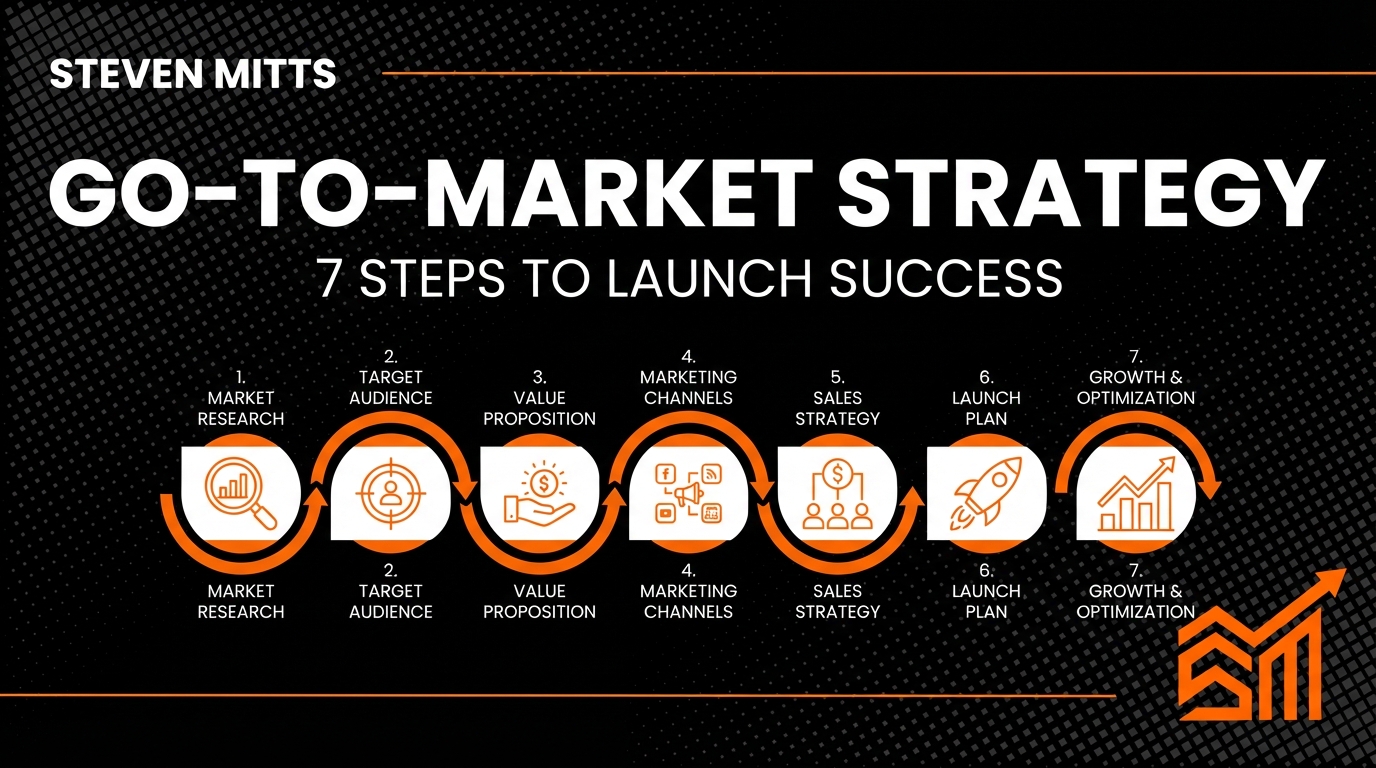
A go-to-market (GTM) strategy is a tactical action plan that details how a company will engage its target customers effectively with its product or service offering. This strategy focuses on identifying the best-fit customers, establishing the most effective marketing channels, and optimizing sales approaches to ensure successful product adoption. At its core, GTM is about delivering the right product to the right consumer using the right approach.
The importance of GTM strategies has skyrocketed amid 2026’s dynamic landscape, characterized by rapid digital transformation and evolving market demands. Companies are increasingly facing pressure to maintain relevance in saturated markets where consumer preferences and technologies continuously shift. According to a 2025 report, 70% of tech startups faced challenges in sustaining market entry mainly due to execution failures. Moreover, 45% of these firms identified GTM strategy as the key to launch success, underscoring the indispensable role of effective execution in the current climate.
In 2026, the relevance of GTM strategies is further amplified by the demand for digital-first approaches and the need for adaptable execution plans. Businesses that can quickly pivot and align with digital innovations stand to gain a competitive edge. The stakes are higher than ever, as companies are not only required to deliver innovative products but also to anchor those products within customer-centric experiences. The surge in digital integration demands that firms adapt swiftly to leverage data insights and tailor their strategies to emerging consumer trends effectively.
As we transition into discussing the foundational role of leadership in honing focus within GTM strategies, the significance of setting concrete objectives to guide market entry becomes clear. Understanding why foundational focus is a leadership decision and key to GTM success will be examined in depth in the upcoming sections. These insights will elucidate how leadership decisions underpin the strategic execution necessary for thriving in today’s complex market.
Section 2: Focus Is a Leadership Decision
In the world of go-to-market strategies, establishing focus is not just a marketing choice but a leadership imperative. Leaders who articulate clear objectives and methodologies create a powerful foundation for successful market entries.
The Importance of Leadership in GTM
Leadership shapes the DNA of a successful GTM strategy by defining clear objectives and setting a precise ideal customer profile (ICP). This clarity ensures that the entire organization works towards cohesive targets. A lack of focus often leads to fragmented efforts, which can derail even the most promising product launches. According to a 2025 survey, 60% of CTOs noted that clear ICP definition boosted market penetration by 35%.
Example/Data: Consider the example of Tech Innovators Inc., which struggled initially due to diffuse goals. Once leadership zeroed in on their ICP, efficiency surged, leading to a profitable launch.
Strategic Alignment of Teams
Creating a unified vision requires synchronized communication channels between marketing, sales, and product teams. Unified goals prevent misalignment and pave the way for streamlined execution. For instance, when Alpha Corp re-aligned its marketing and sales teams through regular unified strategy sessions, it avoided a potentially stalled launch.
“Focus during launch is not a marketing decision, it’s a leadership one.”
Actionable Steps
- Establish company-wide GTM objectives.
- Ensure regular interdepartmental strategy sessions.
- Use standardized performance metrics across teams.
Building Execution-Focused Cultures
Fostering a culture focused on disciplined execution and iterative learning ensures long-term success. Execution-focused cultures thrive on clear directives and adaptability, emphasizing regular assessments of strategies against real-world results.
📊 Case Study
Operational Innovations achieved a 25% increase in efficiency by adopting a disciplined execution methodology. They started with clear customer segmentation and within six months harmonized product and market efforts to reach record engagement levels.
“Go-to-market doesn’t create problems — it exposes how a company executes under pressure.”
💡 Quick Tip: Schedule regular cross-functional reviews to align efforts and swiftly address emerging challenges.
Building an execution-focused culture strengthens the overall GTM strategy, setting the stage for a successful market entry. For more on leadership focus and execution, explore strategic leadership in business growth.
Section 3: Efficient Market Feedback Management
Harnessing market feedback effectively allows companies to refine offerings while maintaining strategic direction. It’s a balancing act between adaptability and strategic focus.
Processing Market Feedback
The key to exploiting market feedback lies in filtering useful insights from noise. By deploying structured feedback mechanisms, companies can adapt products without losing sight of core values. A 2025 study highlighted that businesses implementing structured feedback systems saw a 30% improvement in product-market fit.
- • Surveys and focus groups
- • Social media listening tools
- • Customer interviews
Balancing Adaptability and Consistency
Rapid iteration is essential, but decisions should be rooted in principle. Efforts to integrate feedback must align with the company’s long-term vision. This can be achieved through an iterative framework that balances each feedback round with strategic objectives.
Step-by-step Process
- Collect feedback through various established channels.
- Prioritize changes that align with overarching goals.
- Implement iterative product enhancements.
📊 Case Study
Tech Solutions increased customer satisfaction by 40% by strategically incorporating market feedback. The firm initially catered to broad requests but soon focused on high-impact changes, achieving a notable spike in positive user experiences.
“Balancing customer inputs with vision is crucial for agile product evolution.”
💡 Quick Tip: Prioritize enhancements that keep your product’s core value intact while addressing user needs.
Implement a consistent approach to feedback that sharpens your GTM execution without compromising on strategic cohesion. For deeper insights on developing startup ideas and customer feedback strategies, visit developing startup ideas 2025 key insights & strategies.
Section 4: Making Informed Decisions Amid Uncertainty
Navigating uncertainty is a cornerstone of successful GTM strategy. In the face of ambiguity, founders must master the art of rapid, yet informed decision-making.
Rapid Decision-Making Frameworks
To thrive in turbulent markets, embrace decision-making frameworks that accommodate agility. Speed is critical; however, it should never replace thorough analysis. Companies that employed rapid decision-making processes improved response times by 40% in dynamic environments.
- • Scenario analysis
- • Risk assessment matrices
- • Decision-tree models
Effective Use of Data in Decision Making
Data-driven decisions reduce guesswork. Implementing data analytics tools enhances your understanding of market trends and customer behaviors, guiding more informed choices. Firms utilizing predictive analytics reported a 25% increase in launch success.
Step-by-Step Process
- Gather relevant market data using CRM systems.
- Analyze potential scenarios using decision tree outcomes.
- Implement predictive analytics for proactive strategy adjustments.
📊 Case Study
Beta Dynamics mitigated launch risks by implementing agile decision-making models. They started by instituting a robust scenario analysis protocol and, within a year, experienced a 15% decrease in market entry risks.
“Informed decision-making is the linchpin of resilient go-to-market strategies.”
💡 Quick Tip: Regularly revisit and revise decision-making frameworks to remain adaptive to market changes.
Book a Go-To-Market Execution Review
Get a 60-minute expert review to de-risk your launch, tighten your ICP, and align your revenue teams.
Section 5: Designing Systems for Sustainable Launch Success
For lasting impact, it’s pivotal to construct systems that ensure sustainable and scalable success post-launch. This involves the integration of robust processes and technology.
Building Robust Systems
Systems form the backbone of scalable operations. Establish a framework that encompasses process mapping, technology integration, and continual assessment. Recent findings indicate that implementing integrated systems resulted in a 27% enhancement in operational scale.
- • Process optimization and automation
- • Advanced CRM integration
- • Consistent performance tracking
Leveraging Technology for Scalability
Technology acts as a catalyst for both efficiency and scale. CRM systems, cloud-based technologies, and AI solutions empower teams to operate seamlessly and maintain momentum across growth phases.
Step-by-Step Approach
- Identify and automate repetitive tasks.
- Incorporate AI for personalized customer engagements.
- Establish dashboards for real-time performance insights.
📊 Case Study
ExpandCo grew its market presence by 35% through technology integration and process improvements. Initiating scalable systems early led to sustained growth beyond initial market capture.
“Sustainability in market capture is achieved through structured systemization.”
💡 Quick Tip: Regularly evaluate systems for potential upgrades to sustain competitive advantages.
Section 6: Recognizing and Anticipating Common Launch Failures
Knowing potential pitfalls in GTM strategy empowers companies to proactively address challenges before they affect a launch.
Identifying Common Pitfalls
The majority of launches falter due to predictable challenges: poor team alignment, unclear messaging, and insufficient market research. Awareness of these pain points is vital to crafting a responsive GTM plan.
- • Fragmented communication strategies
- • Misalignment of team objectives
- • Ineffective market penetration techniques
Strategies to Mitigate Launch Risks
- Conduct pre-launch mock exercises.
- Allow for flexible contingency plans.
- Engage in continuous market research and feedback loops.
📊 Case Study
LaunchCo overcame initial setbacks through comprehensive pre-launch simulations, enabling them to capture 20% more market share post-adjustments.
“Anticipation and preparation are your best allies in avoiding launch pitfalls.”
💡 Quick Tip: Implement regular pre-launch reviews to uncover potential misalignments.
Section 7: Setting Future Go-To-Market Trends
Being at the forefront of future trends ensures a competitive edge in the GTM landscape. The focus should be on innovation and adaptability.
Future-Proof Your GTM Strategy
To stay competitive in an ever-evolving marketplace, companies must embrace forward-thinking strategies and next-gen tools. Organizations adopting such approaches report up to a 40% boost in competitive positioning.
- • Hyper-personalization strategies
- • AI-driven insights and automation
- • Digital and omnichannel integration
Embracing AI and Technology
Artificial Intelligence (AI) can decipher vast amounts of data to inform strategic decisions swiftly. Technology-driven insights lead to targeted customer engagement and efficient operations, forming the backbone of future GTM efforts.
Innovation Steps
- Invest in AI to personalize consumer interactions.
- Utilize IoT to gather and analyze consumer data.
- Build omnichannel strategies for seamless user experiences.
📊 Case Study
InnovateCo stayed ahead by integrating AI for hyper-personalized marketing, resulting in a 50% increase in lead generation efficiency.
“The future of GTM unfolds with innovation at its core, leveraging tech advancements.”
💡 Quick Tip: Continually update GTM processes with emerging technology solutions to maintain market relevance.
How to Measure Success and Track Results
Measuring success in your go-to-market (GTM) strategy is crucial. Proper tracking not only confirms whether your launch is hitting its intended targets but also guides strategic adjustments to ensure ongoing relevance in a fast-paced market. Without effective measurement, you risk executing in the dark, missing opportunities for optimization, and potentially derailing your product’s market entry. Here’s how to measure success effectively.
Key Metrics to Track
Primary Metrics:
- Customer Acquisition Rate: Measures the percentage of new customers gained. Target: Achieve a 20% increase in customer acquisition within the first three months post-launch.
- Brand Awareness Levels: Assesses your target audience’s recognition of your brand and product. Target: Aim for a 30% increase in unaided brand recall in surveys within the first month.
- Conversion Metrics: Tracks the percentage of leads who convert to paying customers. Target: Reach a 15% conversion rate from leads generated during the launch campaign by the end of the first quarter.
Tools for Measurement
- • HubSpot CRM: A powerful tool for managing customer relationships, tracking interactions, and automating marketing campaigns to help monitor customer acquisition efficiently.
- • Google Analytics: Essential for understanding customer behavior, this tool provides insights into website traffic, user demographics, and conversion tracking capabilities to see how your audience interacts with your product.
- • Tableau: A data visualization tool that enables you to create interactive dashboards, making it easy to interpret complex data sets about customer demographics and behavior trends.
How to Interpret Your Results
When evaluating your metrics, good results reflect goals you set forth in your GTM strategy. A 20% increase in customer acquisition indicates a successful market entry, while a lackluster 5% growth suggests a signal to re-evaluate your marketing tactics or customer targeting.
Warning signs to watch for include significantly lower-than-expected conversion rates. If your target was a 15% conversion rate and you’re seeing only 5%, it’s crucial to analyze potential bottlenecks in your sales process. Are your messaging and value propositions aligned with customer needs? This data might prompt necessary adjustments such as refining your sales funnel or pivoting your marketing strategy.
Additionally, if brand awareness isn’t showing the 30% increase you aimed for, it may indicate insufficient marketing reach or ineffective messaging. This could necessitate either an increase in promotional efforts or a re-adjustment of your communication strategy to better resonate with the target audience.
Success Benchmarks:
- • Month 1: A 20% increase in customer acquisition, measurable awareness growth, and initial conversion analysis.
- • Month 3: Achieve a 30% increase in brand awareness and refining conversions to 10%.
- • Month 6: Target a 15% conversion rate, with continuous engagement metrics indicating strong retention signals.
Conclusion
Mastering execution is not just a strategy—it’s the lifeblood of your go-to-market success. The clarity of focus and coordination among your teams can make or break a launch, regardless of how innovative your product is. Emphasizing execution transforms your approach from chaos to a well-oiled machine, directly impacting your market presence and profitability.
To put this insight into action, start with these steps:
- Conduct an audit of your current GTM strategy this afternoon to identify gaps in execution.
- Schedule a cross-functional team meeting this week to align everyone on your primary objectives and customer personas.
- Commit to implementing a data-driven tracking tool by the end of the month to analyze key metrics throughout your launch process.
By reinforcing your execution discipline, you’re not just preparing for a launch; you’re laying the groundwork for sustained growth and long-term success. When you master your execution strategy, you’ll ensure that your product doesn’t just enter the market but thrives within it. This focus can transform your business narrative from “just launched” to “market leader.”
Don’t wait for another launch to reinforce your execution capabilities. Schedule your consultation with SM Services today, and let us help you turn your strategic vision into a reality. Your market success starts now!
Talk to Us About Launch Alignment
Map your ICP, messaging, and revenue motions into one cohesive GTM plan—then execute with confidence.
Frequently Asked Questions
What is the real purpose of a go-to-market strategy?
A go-to-market (GTM) strategy serves as a comprehensive roadmap that guides how a company engages with its target customers and brings its product to market. It ensures that resources are strategically allocated to maximize market entry impact—businesses with a clear GTM strategy have been shown to achieve up to twice the market penetration compared to those without one.
Why do most launches fail even with strong products?
Most launches fail due to execution issues such as unclear market positioning and poor alignment among teams. In fact, research indicates that around 70% of failed launches struggle primarily at the execution stage, often because external market forces disrupt unprepared strategies, regardless of the product’s quality.
How should founders handle early market feedback?
Founders should strike a balance between being adaptable and maintaining their core value proposition when it comes to early market feedback. Establishing effective feedback loops is vital; however, they should avoid making reactionary changes that could dilute their brand identity, as evidenced by insights from Harvard’s HBS Online on adaptive strategies.
What metrics should I use to measure the success of my product launch?
To measure the success of a product launch, key metrics to focus on include customer acquisition rates, brand awareness levels, and conversion metrics. Using tools like CRM systems and Google Analytics can help track these KPIs and provide insights on how they align with your strategic goals, with a target benchmark of around a 20% increase in customer acquisition post-launch.
How long does it take to develop an effective go-to-market strategy?
The timeline for developing an effective go-to-market strategy typically ranges from 4 to 8 weeks, depending on the complexity of the product and market conditions. During this time, teams should conduct thorough market research, align messaging, and establish tactical execution plans to ensure a successful launch.